


BUSIA, Kenya – This year, Moses Olal, one of the pilgrims from the Kisumu Catholic Diocese in Western Kenya, had high hopes of joining millions of other faithful in Namugongo for the Martyrs’ Day celebrations when news came in that the annual event had been suspended over the Ebola outbreak in the Democratic Republic of Congo (DRC) and Uganda.
Olal recalled how his group of about 100 pilgrims had been preparing day and night and were set to travel to Namugongo, a suburb in Uganda’s capital, Kampala, on foot for the Martyrs’ Day celebrations.
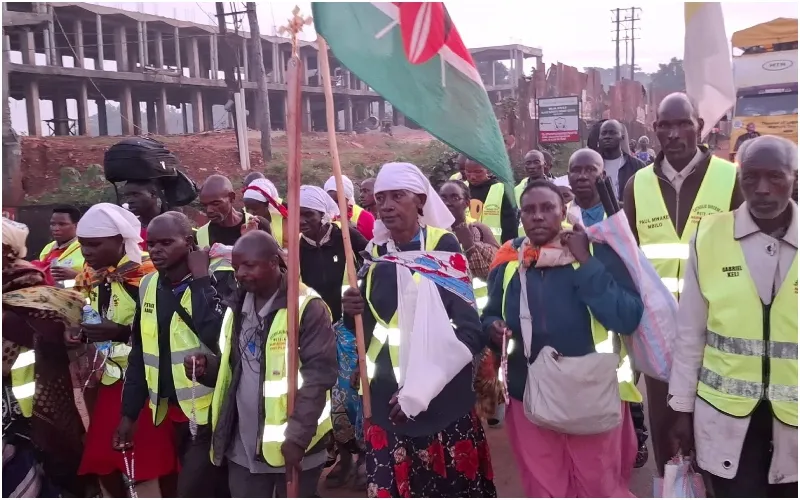
“We had gathered at Ojola Parish and were preparing to begin our journey to the Busia border on our way to Namugongo when information about the suspension of the Martyrs’ Day celebrations trickled in, throwing all of us into a spiritual tailspin,” narrated Olal.
Olal was to be among close to 500 pilgrims from Kenya who were trekking to Namugongo Catholic Shrine for the celebrations when they were returned to their respective dioceses following fears over the Ebola outbreak. Annually, the celebrations attract between 1 and 2.5 million pilgrims.
The development followed the announcement by President Yoweri Museveni of postponing this year’s Martyrs’ Day celebrations at Namugongo to a later date yet to be communicated over concerns that the huge crowds that usually gather could accelerate the spread of the deadly virus.
Ebola Virus Disease is a severe and often fatal illness spread through direct contact with infected people, bodily fluids or contaminated materials. Symptoms include fever, vomiting, diarrhoea, bleeding and sudden weakness.
Alexander Wejuli, a leader at St. Jude Parish Church in Busia, said the Kenyan pilgrims were expected to arrive at the parish beginning May 19 and arrive in Namugongo on May 26, 2026, but were stopped from entering Uganda after the Ebola advisory was issued.
“Already, 407 pilgrims had registered with us with the promise that they would pass by here. Each group was expected to spend a night here before proceeding with the journey the following day. Some of them had even reached Busia, Kenya, and were just waiting to cross over, but we stopped them after communicating to them the issues that were happening in our country,” explained Wejuli.
St. Jude Parish Church has for years served as a resting point for Kenyan pilgrims making the long journey on foot to Namugongo.
WHO declares the Ebola outbreak in the DRC
Wejuli said the affected pilgrims were from the dioceses of Bungoma, Port Victoria, Kisumu, Machakos, Nyahururu and Mombasa.
The postponement came when the Ebola outbreak continued to ravage parts of the Northern DRC, where an estimated 135 people have died and scores remain hospitalised. On Friday, May 29, 2026, Uganda confirmed two cases in Kampala linked to travellers from DRC, bringing the total to nine.
The World Health Organisation (WHO) declared the Ebola outbreak in DRC on May 15, 2026, after several deaths were reported in Ituri Province. The global health body described the Ebola outbreak as a public health emergency. Health officials say investigations and contact tracing are ongoing, and there is currently no licensed vaccine specifically approved for the Bundibugyo strain.
On May 16, 2026, WHO declared the outbreak a Public Health Emergency of International Concern (PHEIC), citing risks associated with cross-border movement, delayed case detection, weak health systems, and insecurity in eastern Congo.
Wejuli reiterated that following the postponement of the celebrations, Christians at St. Jude Parish who had already begun preparations to walk to Namugongo will instead hold prayers from the parish.
“Personally, I don’t feel bad because if it happens, then the government can control this disease. I know we shall still go because Namugongo cannot go away, but for us, we can go away,” explained Wejuli.
Before the postponement, Archbishop Raphael p’Mony Wokorach MCCJ, the Archbishop of Gulu Archdiocese, had said the celebration of Martyrs’ Day is very meaningful to Christians in Uganda and the church at large.
Archbishop Wokorach observed that celebrating the day is an acknowledgement and expression of God’s goodness to the Church and to Ugandans.
“It is an act that refreshes our way of being Christians both in Uganda and elsewhere,” he explained.
Busia County on a high alert over Ebola outbreak
The prelate alluded to the celebration of Uganda Martyrs’ Day every year as an experience of a new Pentecost, a point where people from all corners of the world gather together in prayer as one family of God – united in faith.
However, Catherine Nafuna, a Christian at St. Jude Parish, said the postponement of the celebrations was made in good faith as it seeks to minimise the spread of the Ebola virus.
“For now, we have to keep the faith. We also have to stay strong and adhere to the guidelines and also pray for mercy during these hard and difficult times,” noted Nafuna.
Busia County Executive Committee Member in charge of Public Health, who doubles as the area deputy governor, Arthur Odera, indicated that requisite measures had been put in place to safeguard residents against the disease.
“We have a screening unit here at the Busia border post. Health officials screen people for Ebola symptoms when they come into the country. We have our staff who man this facility around the clock,” explained Odera.
He also said that the regional government has had conversations with the Kenya Red Cross Society for them to also mount a screening unit for pedestrians, especially on the Ugandan side, to make sure that 100% of the incoming human traffic is screened for the virus.
Hundreds of Kenyans, Ugandans and other citizens of other East African member states use the Busia, Malaba, Suam and Lwakhakha border points every day. Many of them use public and private vehicles, while others cross on foot, a situation now raising fears about the possible spread of the Ebola virus that is claiming lives, especially in Uganda and the DRC.
Ebola emerges as a regional risk and concern
The outbreak has heightened fears of cross-border transmission because Eastern DRC shares major movement corridors with other East African member states like Uganda and South Sudan.
“Currently, Ebola is a regional risk. It is not a pandemic. It is a focal epidemic, particularly in Eastern DRC. But it is a regional risk and concern, and that is the reason why the WHO has declared it a Public Health Emergency of International Concern. This is mainly because of the movement of people from the DRC to Uganda, Uganda to Rwanda, Kenya, and so on and so forth. The high mobility is because of the high infection rate, which means the virus can easily spread,” explained Dr. Ahmed Kalebi, the founder of Dr. Kalebi Labs.
In Kenya, the Ministry of Health maintains that the country is adequately prepared and has stepped up enough screening and isolation centers as well as enough human resources trained to handle the situation.
“Kenya has an established isolation treatment capacity for viral haemorrhagic fever (VHF), including Ebola, and there is national haemorrhagic fever treatment at the Kenyatta National Hospital, which is operational and available for the management of the confirmed cases,” said Public Health Principal Secretary Mary Muthoni.
According to PS Muthoni, the government has identified holding and isolation centers for temperature management and assessment of suspected cases before referral. However, public health experts insist that Kenya’s preparedness will largely depend on early detection of the virus.
“The lab that is supposed to conduct these tests must be at the highest biosafety levels used by a Level 4 facility because most labs are at Level 1 or 2. The labs that can actually handle and manage Ebola are KEMRI Nairobi, KEMRI Kisumu and the National Health Laboratory,” added Dr. Kalebi.
PS Muthoni emphasised that MoH has also intensified the issue of travellers.
“The issue of screening at all the points of entry is a must. We are insisting that nobody should enter the country without being screened,” said the PS.
Kenyan pilgrims suffer a blow after the suspension
Meanwhile, Wejuli disclosed that 200 Kenyan pilgrims were expected from the dioceses of Kitale, 70 from the diocese of Bungoma and 85 from the diocese of Port Victoria. The Mombasa and Machakos groups had started trekking from their respective dioceses in April 2026 and were expected to spend more than a month travelling to Namugongo.
Olal further said the group from the Kisii Diocese, consisting of about 65 pilgrims, had reached Ugunja while the Bungoma team was already in Busia town, waiting to cross over into Uganda.
He said the suspension was a major setback for the spiritual nourishment of many Christians in Kenya but added that it was necessary because the large crowds at Namugongo could create conditions conducive to the spread of the Ebola virus.
“It is hard to observe Standard Operating Procedures (SOPs), especially where thousands of people are involved. So, we support the decision of the president of Uganda to suspend the celebrations,” Olal further said.
Olal revealed they would dearly miss the pilgrimage in terms of spiritual nourishment.
“Many people keep wondering why we walk to Namugongo. We devote our time to God. We walk praying, singing and praising the Almighty. This makes the trek special,” Olal stated.
Why Kenyan pilgrims were trekking to Namugongo
Olal emphasised that ahead of Kenya’s August 2027 elections, the group had planned to use the journey to pray for peace and unity.
“Soon, Kenya, we shall be heading into political campaigns and eventually elections. And so, we felt we needed to devote time to pray for peace to prevail in the country, and we thought Namugongo was an ideal opportunity for that,” explained Olal.
Uganda has been setting up border control units with DRC amid the Ebola virus outbreak. The country’s health workers have been on the ground checking people’s temperatures while also helping them wash their hands near Bundibugyo, a mountainous district and chief town in Western Uganda.
“After we heard the news of the Ebola outbreak, we first told the patients in our health facilities how they could prevent themselves from being in contact with people who could be suspected of having contracted the Ebola virus,” said Clovis Bwambale, a health worker in Bundibugyo.
But this is no longer the case, as Uganda has announced the temporary closure of the Uganda–DRC border following a worsening Ebola outbreak in eastern Congo. Authorities said the move is aimed at preventing a possible spillover of the virus.
This is the second time that the Ebola outbreak has been reported in Uganda. The first officially reported Ebola outbreak in Uganda occurred in August 2000, centered primarily in the northern Gulu District.
“Ebola has been here before, and given that it is something that we are now experiencing for the second time, I believe that the government can handle the situation,” said Mbabazi Alice, a vocal politician from Bundibugyo.
Traditionally, Uganda holds the Martyrs Day celebrations on June 3 at the Namugongo Martyrs Shrine in the country’s Catholic Archdiocese of Kampala. As a result of the Ebola outbreak, President Museveni was quoted as saying the decision followed consultations with key stakeholders in the East African nation.
“After consultations with the national epidemic response task force and religious leaders, we have decided to postpone the Martyrs’ Day to a later date, which will be communicated,” President Museveni is quoted as saying in the two-page press release by Uganda State House.
President Museveni empathises with the pilgrims
The Ugandan president explained that the decision to postpone the annual celebration “was made because Uganda receives thousands of pilgrims annually from Eastern Congo, which is currently experiencing an Ebola outbreak”.
“To safeguard everyone’s lives, it is essential that this important event be postponed,” he added.
The Ugandan President, who was sworn in for his seventh consecutive term on May 12, 2026, expressed regret to pilgrims who had already begun journeys to the Namugongo Martyrs Shrine, saying that “the protection of life must come first”.
“I encourage those who have begun their journey to return home, continue observing the precautionary measures, report anyone who is sick, and encourage those who are ill to seek medical care,” President Museveni is quoted as saying.
Earlier in February, the Uganda Episcopal Conference (UEC) entrusted the Catholic Diocese of Kasese with organising the 2026 Martyrs Day celebrations.
In a February 11 update, officials from the diocese’s communications department said cooperation between the diocese and Kasese District Local Government reflected “a shared commitment” to ensuring “a good and spiritually uplifting event”.
“The joint effort underscores unity, faith, and service as both institutions prepare to represent Kasese with dedication and pride at this significant national religious event,” the officials said.
The Uganda Episcopal Conference message to pilgrims
“Through coordinated planning and support, the district leadership is working closely with church authorities to mobilise resources, facilitate logistics, and encourage community participation.”
In their message, the Ugandan bishops urged the faithful to use the day for fervent prayer for the nation, for health workers, and for all those affected by the Ebola outbreak. They called on Catholics to remain calm, united, and hopeful, living out the martyrs’ enduring legacy of fidelity to Christ, love, sacrifice, and truth.
The pilgrims for Martyrs’ Day are drawn from all 19 Catholic dioceses of Uganda, spread across the four ecclesiastical provinces of Gulu, Tororo, Mbarara, and Kampala Archdioceses, respectively. Some pilgrims trek long distances and for weeks to reach the shrine.
From the African continent, pilgrims come from countries such as Kenya, Tanzania, Malawi, Zambia, Rwanda, Burundi, Nigeria, South Sudan and South Africa.
Additionally, other pilgrims arrive in Uganda from countries in Europe and the Americas. Thousands of Catholic pilgrims from DRC—including over 1,500 from the Beni-Butembo diocese—cross into Uganda each year to participate in the celebrations.
Congolese pilgrims primarily travel through the Mpondwe border into the Kasese District. Many begin as foot pilgrims, walking to catch mass at waypoints like the Bukali Catholic Parish in Fort Portal before continuing eastward toward Namugongo.
The Diocese of Kasese plays a major role in coordinating and registering Congolese pilgrims, often hosting them as they prepare and rehearse for the celebrations.
In South Sudan, over 100 pilgrims have discontinued preparations for annual celebrations after the event was cancelled following the severe threat of Ebola spreading from the neighbouring DRC.
How Ugandan Catholics were preparing for the celebrations
Preparations for the annual pilgrimage had already begun. A May 15 report indicated that Bishop Francis Kibira of Uganda’s Kasese Catholic Diocese had officially set off from Kabuyiri Shrine to receive foot pilgrims arriving from DRC.
Another May 16 report indicated that pilgrims from Kenya’s Catholic Diocese of Eldoret, Kapsabet Diocese, Kericho Diocese and Nakuru Diocese had also begun their journey to Uganda.
The Uganda Episcopal Conference (UEC) has called on Catholics nationwide to observe the Solemnity of the Uganda Martyrs on June 3 through prayer services and Masses in their local parishes and dioceses, following the government’s decision to postpone the national celebrations at Namugongo due to Ebola-related concerns.
In a pastoral statement issued by the UEC chairperson, Bishop Anthony Zziwa, of Kiyinda-Mityana Diocese, the bishops directed that this year’s commemorations be decentralised, with each diocese and parish organising its own liturgical celebrations while strictly adhering to Ministry of Health guidelines.
“Following the government’s directive to postpone the national pilgrimage, the Uganda Episcopal Conference directs that the Uganda Martyrs’ Day be observed in the various dioceses and parishes,” the statement reads.
Bishop Zziwa emphasised that despite the postponement of the large gathering at Namugongo, the day remains a profound moment for the Church in Uganda to honour the martyrs’ heroic witness of faith and courage.
The Feast of the Uganda Martyrs, also known in the universal Church as the Memorial of Saint Charles Lwanga and Companions, is marked every year on 3 June in the Catholic liturgical calendar.
While the national pilgrimage to Namugongo has become a major spiritual event attracting millions of faithful from Uganda and beyond, the core celebration remains rooted in local parish communities.
Malawi Catholic Bishops suspend the 2026 pilgrimage
This year, the Diocese of Kasese had been entrusted with coordinating and animating the national celebrations and had launched a fundraising drive to cover logistics, transport, accommodation, and liturgical preparations. Some contributions had already been received, including one from the central government.
Down South, the Malawi Catholic Bishops have also suspended this year’s pilgrimage to the Namugongo shrine following the postponement of the celebrations.
In a Wednesday, May 20 statement, members of the Malawi Conference of Catholic Bishops (MCCB) said the decision followed consultations with various stakeholders after Uganda’s government postponed the annual celebrations.
“This year’s pilgrimage to Namugongo is hereby suspended until further notice,” the statement signed by MCCB Secretary General Fr. Valeriano Mtseka reads in part.
Inside the holy Namugongo Martyrs’ Shrine
The Catholic Bishops appealed to prospective pilgrims to “remain calm and understanding” amid the health crisis, describing the Ebola outbreak in DRC as “a serious public health concern of global significance.”
The Namugongo Martyrs’ Shrine stands on the site where St. Charles Lwanga and his companions, many of them pages in the royal court, including Joseph Mukasa Balikuddembe, Kizito, Andrew Kaggwa, Mathias Kalemba Mulumba, and John Mary Muzeeyi, were beheaded in Mengo-Kisenyi on the orders of Kabaka (King) Mwanga II of the Buganda Kingdom.
The 45 Christian converts aged between 14 and 50 were killed between 1885 and 1887 because of their faith during the early years of Christianity in Uganda. Among them were 22 Catholics who were beatified in 1920 and canonised in 1964. Their witness continues to shape Catholic life in Uganda and has become a significant symbol of Catholic identity and missionary faith worldwide.
For years, the suburb of Namugongo was a hive of activity as it prepared for the annual Martyrs’ Day. This year, traders had already emptied savings accounts to stock sacks of rice and beans.
Hotel managers had repainted lobbies and aired out mattresses. Landlords had surveyed every available patch of earth, unfinished buildings and backyards and calculated how much they could charge for a few square feet of prime pilgrimage real estate.
However, the postponement of this year’s celebrations forms part of Uganda’s heightened surveillance measures aimed at preventing the spread of Ebola into the country amid regular movement of pilgrims and travellers across the border.









Discussion about this post