


NAIROBI, Kenya – The Kenyan government’s intention to establish a U.S.-backed Ebola quarantine facility suffered a significant blow after the move was publicly blocked by the High Court.
Judge Patricia Nyaundi of the High Court imposed temporary conservatory orders on Friday, May 29, 2026, which stopped the facility’s operationalisation. In accordance with this agreement, the court also prohibited any foreign nationals who were exposed to or afflicted with Ebola from entering, transferring, or receiving from the country.
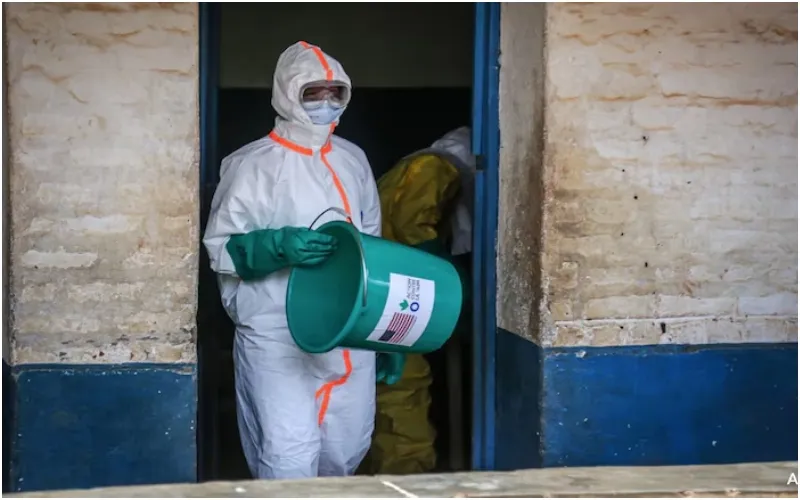
Kenya had given written consent for the United States to establish a quarantine facility in the East African country for Americans exposed to the Ebola outbreak focused in the Democratic Republic of the Congo (DRC). According to individuals privy to the matter, the approval gives the United States authority to land at an air force base in Laikipia, central Kenya.
The facility, with a 50 to 250-bed capacity, would be staffed by members of the U.S. Public Health Service, a uniformed branch of the Department of Health and Human Services. Secretary of State Marco Rubio said at a Cabinet meeting on Wednesday, May 27, 2026, that the number one priority for U.S. policy is to protect the American people.
“We cannot and will not allow any cases of Ebola to enter the United States,” said Rubio.
Rubio disclosed that all the state agencies are working ‘hard’ to contain the crisis in countries where it is located, particularly the DRC.
“We have searched for systems to make sure that that is being contained there, and most agencies are involved in tracking people just to make sure that nobody comes into the country with Ebola, creating problems for us. We feel we have good efforts in place to do that. Americans should feel assured that the president and his administration are doing everything we can to protect them,” Rubio further assured.
Kenya had advocated for the facility to be accessible to people of all nations, not only Americans. It wasn’t immediately apparent if that would be the case.
CS Aden Duale responds to the healthcare deal
In a statement on Wednesday, May 27, 2026, Kenya’s Ministry of Health said it was in discussions with Washington and other global partners about cooperating on the response to Ebola but did not mention the plan for a quarantine facility.
Health Cabinet Secretary Aden Duale confirmed that the government of Kenya had noted ongoing discussions with the U.S. government and other global partners regarding international collaboration on strengthening preparedness and response mechanisms for Ebola Virus Disease (EVD) and other emerging public health threats.
“Kenya welcomes partnerships that strengthen global health security and reaffirm our shared commitment to protecting lives through coordinated, science-based action. Kenya’s role in regional and global health security has been built over many years through deliberate investments in health systems strengthening, public health surveillance, workforce development and emergency preparedness. Our health professionals have supported responses to major disease outbreaks across the region, including the West Africa EVD outbreak in 2014-2016. Our institutions have continued to play an important role in advancing disease surveillance, laboratory systems, emergency response and public health coordination,” explained CS Duale.
But in a quick rejoinder, the Kenya Medical Practitioners, Pharmacists and Dentists Union (KMPDU) called out what it termed the hypocrisy of the ongoing backdoor negotiations between the government of Kenya and the United States administration regarding the establishment of an Ebola quarantine and treatment facility at Laikipia Air Base.
“As the vanguard of the Kenyan healthcare system, we are utterly disgusted by the government’s apparent willingness to trade national biosecurity and the lives of the citizens for foreign air. We will not sit back and watch Kenya be treated as a containment colony for a lethal pathogen that we did not generate,” said Dr. Davji Atellah, the secretary general and CEO, KMPDU.
In a statement, KMPDU questioned why Kenya has been targeted, observing that the current Bundibugyo strain Ebola outbreak is centred in the DRC and Uganda.
“We demand absolute transparency from CS Duale and the Ministry of Foreign Affairs on why Kenya has been selected as the designated dumping ground for exposed U.S. citizens while nations directly bordering the epicentre are bypassed. If the United States believes the 12-hour medevac flight back to Washington is too dangerous for its citizens, by what logic is it safe to fly infected or exposed individuals into Kenyan airspace and drop them in Laikipia?” posed Atellah.
CS Duale maintained that Kenya has activated its national Incident Management System, intensified surveillance at Points of Entry, designated laboratories for testing and strengthened coordination mechanisms at national and county levels.
“Preparedness and response activities continue to be enhanced in collaboration with counties, regional institutions and international partners. To date, more than 55,000 travellers have been screened for the disease through various Points of Entry, and we have tested a total of 10 cases, of which all have turned negative,” Duale explained.
Why Kenyan health facilities are on the deathbed
The CS emphasised that any arrangements regarding international health cooperation will be guided by Kenya’s national laws, public health regulations, biosafety and biosecurity standards, and the overriding responsibility of government to safeguard the healthcare and welfare of Kenyans.
“Protection of Kenyan citizens, frontline health workers, and communities remains paramount,” said CS Duale.
Laikipia leaders have also added their voice to the issue while strongly rejecting the proposal. Led by Laikipia Senator John Kinyua and local Members of Parliament, the leadership issued a joint statement arguing that exposing Kenyan citizens to a lethal virus is an unacceptable biosecurity risk.
While taking a swipe at the CS, Atellah poured cold water on the Ministry of Health’s claims, stating that Kenya’s local facilities are too broke to function; instead, he claimed that it is actively facilitating the importation of a deadly haemorrhagic fever.
“Our public hospitals are currently strictly crippled. We lack basic diagnostic reagents, essential medicine and functional intensive care infrastructure. Yet, the government is stretching our already thin national security and public health surveillance mechanisms to accommodate a foreign-funded biohazard hub,” Atellah argued.
The KMPDU SG reiterated that the government cannot manage a local health crisis by ‘importing’ an international one.
“The government must explain to Kenyans why resources and executive attention are being poured into a foreign quarantine facility while Kenyan citizens die in under-equipped public wards from preventable ailments,” added Atellah.
The Kenya-U.S. plan mirrors comments made by President Donald Trump as a private citizen in 2014, when he criticised President Barack Obama for bringing infected Americans home during the West African outbreak.
“Treat them, at the highest level, over there,” he wrote at the time.
In addition to the aforementioned $112 million in bilateral foreign assistance, the State Department has committed $50 million to the UN Office for the Coordination of Humanitarian Affairs (OCHA) to fund up to 50 Ebola response clinics in affected areas.
U.S. injects funds to combat the Ebola outbreak
State Department implementers have deployed responders to dozens of health facilities in Ituri, North Kivu, and South Kivu in the DRC and are working to improve the capacity of Ebola treatment centers and Ebola transit units across affected areas. The Department is also providing $300 million through OCHA pooled funds to the DRC and Uganda for broader humanitarian efforts in the affected region.
CS Duale indicated that Kenya values its longstanding partnerships with the United States and other global partners in strengthening health systems and health security capacities.
“These partnerships have contributed significantly to investments in surveillance systems, workforce training, emergency preparedness and health infrastructure that benefit not only Kenya but also the broader region. Kenya remains committed to playing its role as a responsible regional and global partners in advancing health security,” he added.
As Nairobi continues to strengthen preparedness and resilience, the CS disclosed that the approach will remain guided by science, collaboration, national interest and the shared objective of protecting populations from emerging public health threats.
“Kenya is ready. Kenya is capable. Kenya will continue to act responsibly in safeguarding both national and global health security. We shall be giving regular updates on a timely basis,” explained the CS further.
But through Atellah, KMPDU indicated that it has, for years, sounded the alarm on the severe, chronic shortage of doctors and healthcare workers in Kenya. Atellah revealed that thousands of qualified, highly trained Kenyan doctors and healthcare workers remain unemployed or underemployed on precarious, low-paying casual contracts, while public facilities suffer a deficit of over 100,000 healthcare workers.
“We note with extreme suspicion reports that this facility is to be staffed by the U.S. Public Health Service Commissioned Corps. KMPDU issues a stark warning. We will not tolerate an apartheid healthcare model on Kenyan soil,” noted Atellah.
If the quarantine facility is built, Atellah announced that the Kenyan government must leverage this as a non-negotiable mandate to permanently employ the thousands of jobless Kenyan doctors and nurses into the public mainstream, fully funded by the state and the international partners pushing the deal.
“We will stand against any arrangement where Kenyan doctors are sidelined as second-class observers or used as low-cost, high-risk auxiliary labour without proper permanent employment terms, elite-level hazardous duty pay, and medical cover,” said the SG.
Katiba Institute in court to block the deal
Katiba Institute had filed an urgent petition at the High Court in Nairobi challenging plans to establish the Ebola quarantine and treatment facility in Kenya.
The petition, lodged through Counsel Joshua Malidzo, names the Attorney‑General and the Cabinet Secretary for Health as respondents. Katiba Institute argues that the move raises grave constitutional concerns, warning that the government cannot expose Kenyans to significant health risks without public participation, parliamentary oversight, and full disclosure of agreements.
Among the orders sought are halting the facility’s operations, barring entry of exposed persons, compelling the Health Ministry to present a contingency plan within 24 hours, and mandating disclosure of all terms and assessments tied to the arrangement.
Executive Director Nora Mbagathi said the case is about safeguarding constitutional accountability and protecting public health, stressing that expediency must never be placed above the lives and safety of Kenyans. The High Court has scheduled the inter partes hearing and mention of the case for June 2, 2026.
On the other hand, KMPDU has issued the government with a 48-hour ultimatum to make the negotiations public, warning that should the Ministry of Health proceed to sign away Kenya’s health security to ‘appease’ foreign masters without addressing the structural healthcare shortages and staffing crises, it will mobilise nationwide industrial action.
“We will protect our healthcare workers, and we will protect our country,” warned Atellah.
Meanwhile, suspected Ebola cases in the DRC are now approaching 1,000. One American doctor infected with Ebola and several other U.S. citizens exposed to the virus have been sent to Germany for treatment and monitoring. Another American doctor exposed to the virus was sent to the Czech Republic.











Discussion about this post