


Editor’s note: In this opinion piece, Yussuf Osman Ahmed observes that counterfeiting has become an increasingly complex challenge to consumer protection, public health, legitimate trade, industrial development, and intellectual property (IP) protection in Africa.

It affects a wide range of products, including medicines, alcoholic beverages, cosmetics, agricultural inputs, automotive spare parts, electronics, food products, and household goods. The challenge is no longer confined to physical markets and border points. The rapid expansion of digital commerce, social media, and online marketplaces has created new channels through which counterfeit goods can reach consumers.
Africa’s demographic structure provides both a challenge and an opportunity. The United Nations estimates that Africa’s population exceeded 1.5 billion in 2024 and is projected to reach approximately 2.5 billion by 2050. This growing population represents not only a large consumer market but also a potentially powerful network of millions of informed consumers who can participate in preventing, identifying, and reporting counterfeit products.
Consumer empowerment should therefore become a central pillar of Africa’s anti-counterfeiting strategy. Rather than treating consumers merely as victims of counterfeit trade, they should be recognized as frontline partners in market surveillance, information generation, and enforcement.
The central opportunity is to transform the population from a passive market into an active consumer-protection network. In this context, consumer empowerment is not an auxiliary activity to anti-counterfeiting enforcement; it is one of its essential foundations. The greater the number of informed and technologically empowered consumers, the greater the capacity of African societies to detect suspicious products, generate intelligence, support legitimate businesses and protect public health.
Africa’s demographic growth should therefore be viewed not merely as an expansion of the consumer market but as an opportunity to build the continent’s largest human-centered, technology-enabled consumer protection network
It is noted that Africa’s demographic dividend and the consumer protection opportunity are observed through Africa’s population growth and expanding consumer market. The African Continental Free Trade Area (AfCFTA) seeks to create a single continental market and currently brings together the 55 African Union member states, representing a market of more than 1.3 billion people. The expansion of intra-African trade presents enormous opportunities for manufacturers, traders, innovators, and consumers. However, a larger and more interconnected market can also create greater opportunities for illicit traders to distribute counterfeit and substandard products across borders. Consequently, the expansion of African trade must be accompanied by stronger consumer protection mechanisms. The question should not simply be how Africa can move more goods across its borders, but how Africa can ensure that the goods reaching its consumers are genuine, safe, and compliant with applicable standards. The consumer population can become an important component of this system. With appropriate awareness, digital tools, and accessible reporting mechanisms, millions of consumers can become a decentralised network of market observers.
Counterfeiting is frequently viewed primarily as an intellectual property enforcement problem. However, its consequences extend considerably beyond infringement of trademarks, patents, industrial designs, or copyrights. As such, counterfeit medicines may endanger patients; counterfeit agricultural inputs may affect food production; counterfeit automotive components may compromise road safety; and counterfeit alcoholic beverages and cosmetics may expose consumers to serious
health risks.
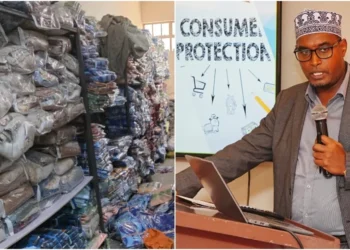
Recent research by the Anti-Counterfeit Authority (ACA) in Kenya illustrates the importance of consumer participation. The ACA’s consumer research reported high awareness of counterfeit goods, but awareness did not necessarily translate into reporting or effective avoidance. The research found that 83.85% of surveyed consumers were aware of counterfeit goods, while 94% had never formally reported a counterfeit purchase. This illustrates an important distinction in which an informed consumer is not necessarily an empowered consumer. Empowerment occurs when information enables the consumer to make safer purchasing decisions, verify products, recognise suspicious transactions, and report suspected counterfeiting through accessible channels.
The Four “Ps” of Consumer Detection is a mechanism in consumer empowerment that can be strengthened through a simple, practical framework based on four “Ps”: Place, Product, Packaging, and Price. Consumers should consider where a product is purchased. Unregulated markets, unauthorised outlets, and suspicious online sellers can present increased risks. Consumers should be encouraged to verify whether a trader is an authorized distributor or retailer where such information is available.
Consumers should examine product quality, labelling, spelling, manufacturer information, batch numbers, expiry dates, and other identifying characteristics. Unusual differences from products previously purchased can provide an important warning. Packaging can contain security features, authentication codes, holograms, QR codes, serial numbers, and other identifiers. Consumers should be taught how to use these features rather than merely being told that a security mark exists. An unusually low price can be an indicator of risk, although price alone cannot establish that a product is counterfeit. Consumers should consider price together with the place of purchase, product characteristics, and packaging. This framework can be transformed into a simple consumer education campaign: “Check the Place, Product, Packaging, and Price before You Purchase.”
Technology can be utilized as the new frontline of consumer empowerment that provides an opportunity to move consumer protection from a predominantly reactive model to a more participatory and preventive model.
Manufacturers can incorporate digital authentication mechanisms that enable consumers to verify products using mobile phones. QR codes, unique serial numbers, scratch-and-reveal codes, SMS verification systems, blockchain-supported traceability, and other technologies can potentially help establish product provenance. The onus of protection largely lies on the manufacturers, whereas the government supplements the interest of the public through treaties, conventions,, and TRIPs agreements.
However, technology should not become a substitute for regulation or enforcement. Authentication systems must be designed carefully because counterfeiters can also copy or manipulate visible codes. Technology, therefore, needs to be combined with secure databases, supply chain traceability, market surveillance, and effective enforcement. The World Intellectual Property Organisation has identified technological tools as an important component in addressing digital piracy and counterfeiting. It has also examined how online marketplaces can develop measures to address counterfeit trading, including risk-based approaches appropriate to different platform business models.
The African consumer should consequently be educated not simply to use technology but to use it critically, such as the use of the smartphone from a communication device into a consumer protection tool.
Creating a Continental Consumer Reporting Network will, in addition, provide the greatest opportunities for Africa is to establish interoperable consumer reporting systems. A consumer in Nairobi, Lagos, Accra, Kampala, Johannesburg, or Cairo may encounter similar counterfeit products or the same organized distribution network. Yet information may remain within national or institutional boundaries. A continental consumer protection ecosystem could facilitate the reporting of suspected counterfeit goods through mobile applications, websites, SMS platforms, WhatsApp-based systems, and toll-free reporting mechanisms. The information could then be analysed to identify patterns, repeat offenders, suspicious distribution routes, and emerging counterfeit products.
The consumer would therefore move from being the final recipient of enforcement action to an active source of enforcement intelligence.
The Digital Commerce and the New Counterfeiting Challenge: The growth of e-commerce requires particular attention. Online marketplaces can provide legitimate businesses with access to consumers across borders, but they can also provide counterfeit traders with anonymity, speed, and geographical reach. Consumers need to be educated about online purchasing in the same way they are educated about physical markets. They should examine seller information, product descriptions, reviews, return policies, payment methods, and authentication opportunities. They should also understand that photographs displayed online do not necessarily establish the authenticity of the product delivered.
WIPO’s research on online marketplaces notes that different platforms operate different business models and therefore require risk-based approaches to anti-counterfeiting controls.
African authorities, manufacturers, intellectual property owners, payment providers, logistics companies, and online platforms should therefore cooperate to establish mechanisms for identifying and removing suspicious listings while preserving legitimate commerce.
The need for harmonisation, standards, and consumer confidence in the process of consumer empowerment must also be supported by stronger African standards and conformity-assessment systems. The African Organisation for Standardisation (ARSO), established in 1977 by the OAU and UNECA, has a mandate that includes harmonizing standards and conformity-assessment procedures and supporting consumer welfare and safety. This provides an important continental foundation. Harmonized standards can make it easier for consumers and enforcement agencies to understand what constitutes a compliant product across African markets. As AfCFTA expands intra-African trade, consumer protection should develop alongside trade facilitation. A single continental market requires increasing confidence that products circulating across borders meet applicable requirements.
The need to graduate from awareness to consumer intelligence is noted; traditional consumer awareness campaigns often rely on posters, radio programs, television advertisements, workshops, and public meetings. These remain important, particularly where digital connectivity is limited. However, Africa’s growing youth population creates an opportunity to supplement traditional awareness with digital engagement. Schools, universities, technical institutions, youth organizations, consumer associations, traders, and community groups can become partners in digital consumer education.
A continental campaign could use short videos, social media content, interactive quizzes, product-identification demonstrations, and mobile verification exercises. Rather than telling consumers that counterfeit products are dangerous, campaigns should demonstrate how to identify, verify, and report them. Possibly, consumer culture needs to be created in which consumers can routinely ask Where did I buy it? Is the product genuine? Can I verify it? What should I do if it is suspicious?
The author is Yussuf Osman Ahmed, Director of Enforcement at the Anti-Counterfeit Authority (ACA).
Views expressed in this article are solely those of the author and do not represent the editorial position of news9.africa.











Discussion about this post