


Nairobi, Kenya- Kenya is now turning to a global road safety management system to turn its National Road Safety Action Plan into measurable action and end preventable deaths on its roads.
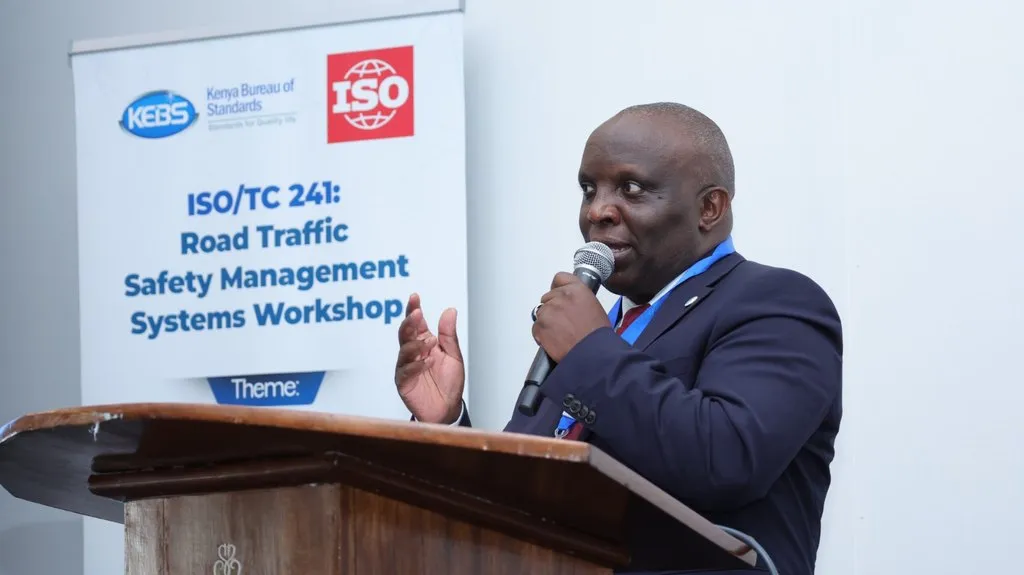
Industrialization Secretary Prof. Erastus Gatebe said the adoption of ISO 39001 will force organisations to manage road risk, and hold regulators and operators accountable.
“A standard is, at its simplest, a document. But its true value is not in the document. Its value is in the discipline it demands,” said Prof. Gatebe.
“When an organization adopts ISO 39001, it is saying: I will manage this risk. When a regulator recognizes a system, it is saying: I trust what it produces. When a community sees fewer crashes on its roads, it is living the result,” he said.
He was speaking in Mombasa during the opening of the ISO/TC 241 Plenary Week Meeting and Workshop in Mombasa hosted by the Kenya Bureau of Standards (KEBS) in collaboration with the International Organization for Standardization (ISO).Prof. Gatebe said Kenya’s National Road Safety Action Plan 2024-2026 already lays out the framework for safer roads.
“ISO/TC 241 gives us the tools to make that plan measurable. Together, they turn intention into accountability,” he said.
He said the solution must put ordinary Kenyans at the centre.
“The boda boda rider who feeds his family one trip at a time. The mother crossing with her children on the way to school. The passenger who trusts that the bus she boards will get her home. They must be at the centre of every standard we write and every decision we make,” he said.
“Road safety is not the responsibility of one institution. No single agency can carry this alone,” he added.
KEBS Director General Esther Ngari through a speech read on her behalf by KEBS Deputy Director for Standards Development and Trade, Maryann Kindiki said the meeting seeks to advance international standards in addressing road traffic risks and promoting safer, sustainable and efficient mobility.
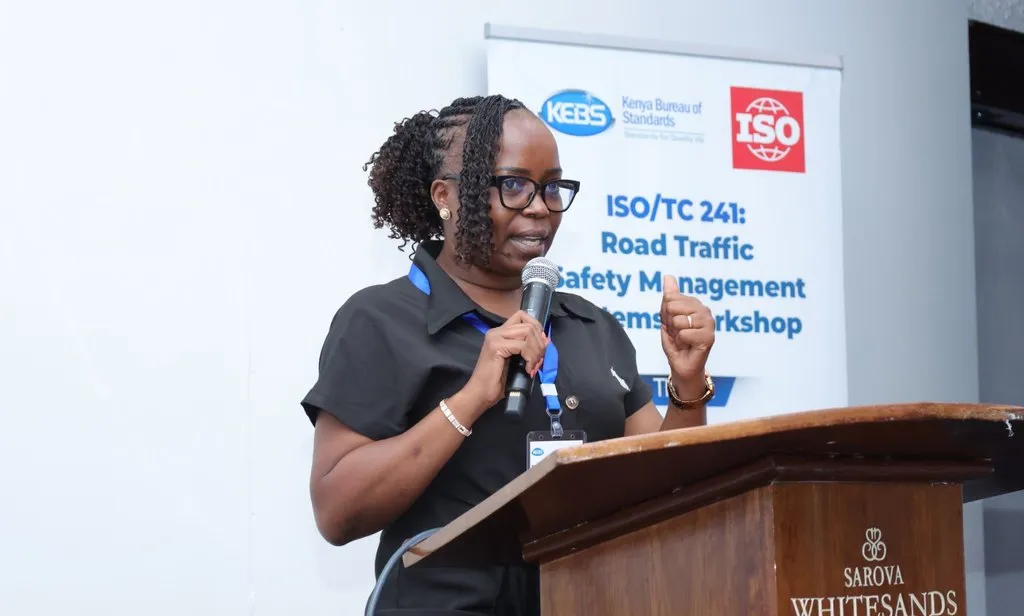
“Across the world, road traffic accidents continue to claim lives, cause serious injuries, and impose significant social and economic costs on our communities,” said Ms Ngari.
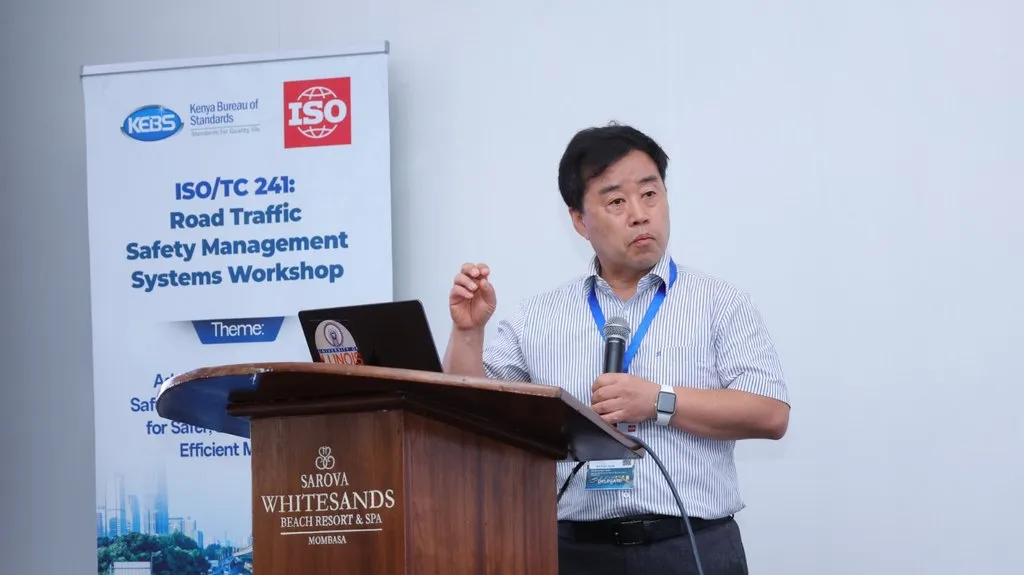
Africa ISO Chair Dr. Young Jun Moon said the solution must start with better data.
“Governments should work in harmonization of road accidents data so that it can inform specific interventions on road safety based on available and viable data,” said Dr. Moon.
But Prof. Gatebe warned that standards alone will not work unless Kenya confronts its failure to protect road users.
“Every year, Kenya loses thousands of lives on its roads. Behind every number is a name. A family. A livelihood. A future interrupted,” said Prof. Gatebe.
“When a pedestrian is struck crossing a road with no safe crossing, we have failed them. When a boda boda rider is thrown from his machine on a road not built with him in mind, we have failed him. When a child cannot walk safely to school, we have failed the next generation,” he said.
KEBS Deputy Director for Standards Development and Trade, Maryann Kindiki, said attitude remains the biggest problem.
“The biggest challenge is failure to change attitudes even after sensitisation on the importance of road safety standardization,” said Kindiki.
Prof. Gatebe challenged delegates to leave with action, not just notes.
“I encourage you to leave this workshop with more than notes. Leave with commitments. Leave with partnerships. Leave with action,” he said.
“When infrastructure is safe, behaviour is responsible, and enforcement is consistent, road safety moves beyond a goal it becomes a guarantee. Safer Roads. Safer Lives. Every Journey,” he said.











Discussion about this post