


NAIROBI, Kenya – Following the unveiling of the Grand Ethiopian Renaissance Dam (GERD), National Assembly Speaker Moses Wetang’ula has urged the Egyptian government to engage in comprehensive conversation in addressing its long-standing conflict with Ethiopia over the usage of Nile Basin resources.
Wetang’ula spoke on Wednesday, September 24, 2025 following a meeting with Ambassador Hatem Yousri Hosni, the Ambassador of the Arab Republic of Egypt, that the conflict surrounding the dam project can only be resolved in the long run through consensus, mutual respect, and the involvement of all stakeholders.
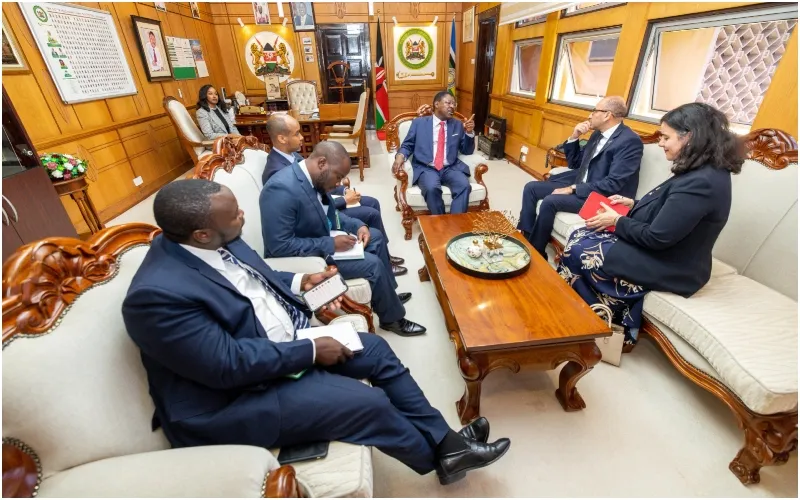
He urged Cairo to “call everybody to the table” in order to negotiate a peaceful conclusion that ensures regional peace and stability.
“We have no problem with you, Egypt, nor with our neighbours in Ethiopia. In fact, we are beneficiaries of the Renaissance Dam since we import electricity from them. And as my President recently said, if you, Egypt, have any concerns about the Nile, do not focus solely on Ethiopia. Call everyone to the table, and together we can help resolve the issues,” said Wetang’ula.
The Speaker emphasised that water, as a common resource, should unite rather than separate nations, and that communication provides the only long-term solution to the decades-long impasse.
He warned against unilateral acts that could exacerbate regional tensions, saying such moves risk destabilising the Horn of Africa.
Egypt has long expressed concern that Ethiopia’s Blue Nile dam project could restrict water flow downstream, jeopardising agricultural and domestic supplies.
However, Ethiopia believes that the GERD is critical to its energy security and economic development.
How countries can ensure equitable usage of the Nile resources
Sudan has likewise found itself stuck between the two regional powers as a result of this endeavour.
However, Ambassador Hatem Yousri Hosni stated that the construction of the Grand Ethiopian Renaissance Dam (GERD) violates international law and does not adhere to established legal frameworks.
He explained that Egypt has been working for more than a decade to establish a legally binding contract that would protect its rights while ensuring equitable usage of the Nile resources.
Despite expressing goodwill and engaging in negotiations, he claimed Ethiopia had always failed to commit in the final phases.
“In Washington, for instance, we were ready to sign a treaty after lengthy negotiations during the first administration of President Donald Trump. At the very last moment, however, Ethiopia failed to show up. They were simply buying time to complete the construction of the dam,” Ambassador Hosni said.
Why Ambassador Hosni took issue with Kenya
While noting that Egypt respects the right of every Nile Basin country to benefit from the waters through electricity generation, he expressed disappointment that Kenya participated at a high-level launch of the dam.
“We were frustrated that Kenya was represented at that event. No other country from the Basin was present only Kenya. Djibouti and Somalia are not part of the Nile Basin,” he added.
Ambassador Hosni, on the other hand, emphasised that Egypt still regards Kenya as a true and trustworthy friend.
He stated that, while South Sudan’s stance has been a source of annoyance, Kenya holds a unique and high position on Egypt’s foreign policy agenda.
“And your benefiting from the Ethiopian dam does not harm us. Our issue with Ethiopia is not about the electricity they generate but about the Nile waters. We must reach a bilateral or trilateral agreement between Egypt, Sudan, and Ethiopia an agreement that is binding under international law,” he said.
Why Africa should always solve its own problems
Wetang’ula reiterated Kenya’s position that Africa has the capacity to resolve its own challenges through cooperation within continental frameworks such as the African Union.
“While in Ethiopia, my President emphasised the need for a bilateral or trilateral agreement between Egypt, Sudan, and Ethiopia, one that must be anchored in international law. When he returns from New York, I will speak with him and advise him to engage the Egyptian leadership as well as other Nile Basin countries so that we can come together,” Wetang’ula stated.
“Africa has had too many conflicts, and we do not want new ones. We must resolve our issues peacefully,” he added.
On his part, Ambassador Hosni reiterated that Egypt would never tolerate any infringement on its rights over the Nile waters, describing the river as “an existential part of our life.”
“This is an eternal bond that we must preserve, not fight over. We should cooperate on it. And as Kenyans are giving us the water to live, we are willing to give you back in return through electricity, healthcare, social welfare, housing, and social housing projects that you are undertaking,” he said.
The speaker underscored the importance of harnessing the Nile’s resources equitably to promote growth, energy access, and stability across the basin.
“Kenya contributes significantly to the Nile waters through Lake Victoria, and as part of the Basin, we have a responsibility to advocate for collective solutions that respect the rights and needs of all countries involved,” he noted.
How Kenya can help resolve the Nile waters conflict
The Speaker also emphasised Kenya’s friendly relations with Cairo and Addis Ababa, stating that Nairobi is willing to serve as a mediator in reaching an agreement.
He also emphasised the significance of expanding Egypt-Kenya relations beyond water diplomacy, highlighting potential prospects in healthcare, trade, and legislative exchanges.
During the meeting, the Egyptian ambassador reaffirmed his country’s intention to strengthen cooperation with Kenya in areas such as energy, social welfare, and investment, while also expressing concern about Ethiopia’s unilateral filling of the GERD reservoir, which they argue violates international law.
Wetang’ula urged both sides to prioritise the welfare of their people over political brinkmanship, stating that “a peaceful and cooperative approach to the Nile issue will not only safeguard livelihoods but also serve as a model for resolving resource-based disputes across Africa.”







Discussion about this post