


Editor’s note: In this opinion piece, Daouda Ngom calls for urgent action to harmonise livestock development and environmental protection. This message is particularly important for our region, where millions of people depend on livestock for their livelihoods, nutrition and resilience.
Across Africa, pastoralists and livestock keepers sustain herding systems which are closely bound up with our landscapes and crucial to nationwide food security, economic growth, and ecological balance. In my country, Senegal, almost 70% of our land is used to graze livestock.
And yet, I hear it often argued that – if we want a sustainable future – we must choose between hooves and habitats because livestock is an “environmental liability”.
But this point of view is misunderstood. Across Africa, innovative approaches and technologies are being piloted to allow livestock and a healthy environment to coexist. What we need now is more investment and collaboration to scale these breakthroughs.
Despite being home to more than 85% of the world’s pastoralists and livestock keepers, sub-Saharan Africa produces just 2.8% of global meat and milk. As a result, one in five Africans does not have adequate access to nutritious foods, including animal source foods. Fixing this can be simple: a single egg, a cup of milk, or a small piece of meat can make all the difference in combating malnutrition.
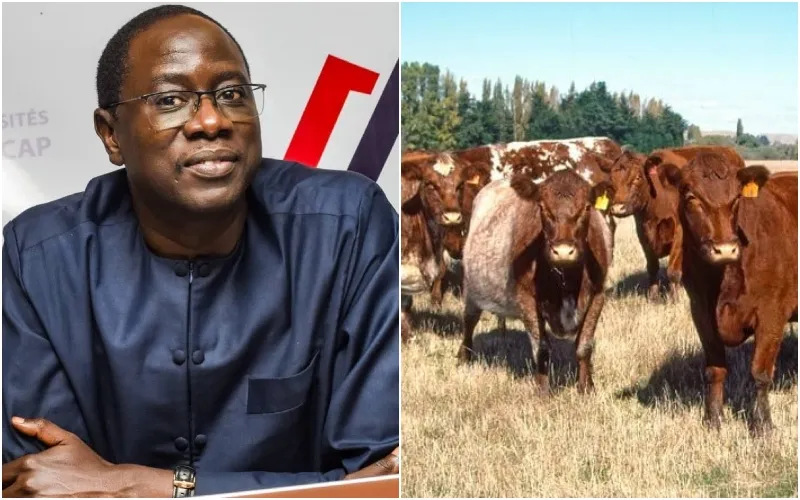
Meanwhile, populations are growing and urbanising faster here than anywhere else in the world. Demand for meat and dairy products is forecast to rise 300% by 2050.
What can African pastoralists learn from their Senegalese counterparts
Thankfully, evidence is already out there which proves that we don’t need to sacrifice a healthy environment to meet this rising demand.
Pastoralists in Senegal, for example, move their animals strategically to mimic natural grazing patterns, considering rainfall to prevent overgrazing. This not only improves biodiversity and soil quality but also reduces dry vegetation and the growing threat of wildfires.
To support them, the Senegalese government has been providing our pastoralists with detailed weather data and forecasts to help them optimise grazing and manage their livestock more efficiently.
Working with communities in this way has been shown to reduce conflicts over land and water resources and restore landscapes.
Elsewhere in Africa, animal health interventions are demonstrating that better, not necessarily fewer, livestock is the answer to sustainability in the sector. East Coast fever vaccination programmes have reduced calf mortality up to 95% in some countries. More than 400,000 cattle have been saved in the past 25 years, reducing emissions up to 40%.
Moreover, new thermotolerant vaccines for the highly contagious viral disease peste des petits ruminants (PPR) – as demonstrated already in Mali – offer a promising way to curb the $147 million in annual losses of sheep and goat keepers across Africa. Boosting productivity among these climate-resilient animals will be essential for nourishing Africa’s rapidly growing population as climate change intensifies.
How can African pastoralists overcome their day-to-day challenges
However, despite these successes, an important challenge remains. I have seen firsthand that many pastoralists, smallholders and subsistence farmers lack the knowledge and resources needed to access and implement these innovations. These groups account for the majority of Africa’s livestock keepers and must be reached for these innovations to realise their benefits at scale.
Two things are needed to bridge this gap. First, greater collaboration between policymakers, researchers, farmers and businesses can help us to better understand the challenges that livestock farmers face and help them to produce more without compromising our environment.
For example, collaborative initiatives like the Livestock and Climate Solutions Hub launched by the International Livestock Research Institute are a way of showcasing practical ways for farmers to reduce their herds’ impact on the environment.
The second element is investment. For decades, despite the clear potential of high returns on investment, the livestock sector has suffered from a vast investment gap, receiving as little as 0.25% of overall overseas development assistance as of 2017. It must be made financially viable for livestock keepers to invest in technologies and approaches that raise productivity sustainably, or else this mission will not even get off the ground.
The upcoming World Bank Spring Meetings – where funding for development initiatives will be determined – present a timely opportunity to kickstart this paradigm shift so that livestock is recognised within green financing frameworks.
African countries, in turn, must do their part by incorporating livestock into their national economic development plans and their climate action plans. This will help encourage funding streams from global investors and climate financing mechanisms, ultimately catalysing a multiplier effect of billions in livestock sustainability investment.
The solutions are within reach. What is needed now is the will to act decisively and unlock the continent’s unparalleled natural resource potential to build a future where prosperity and sustainability go hand in hand.
The author is Daouda Ngom, Minister of Environment and Ecological Transition for Senegal. Views expressed in this article are solely those of the author and do not represent the editorial position of News Nine.






Discussion about this post