


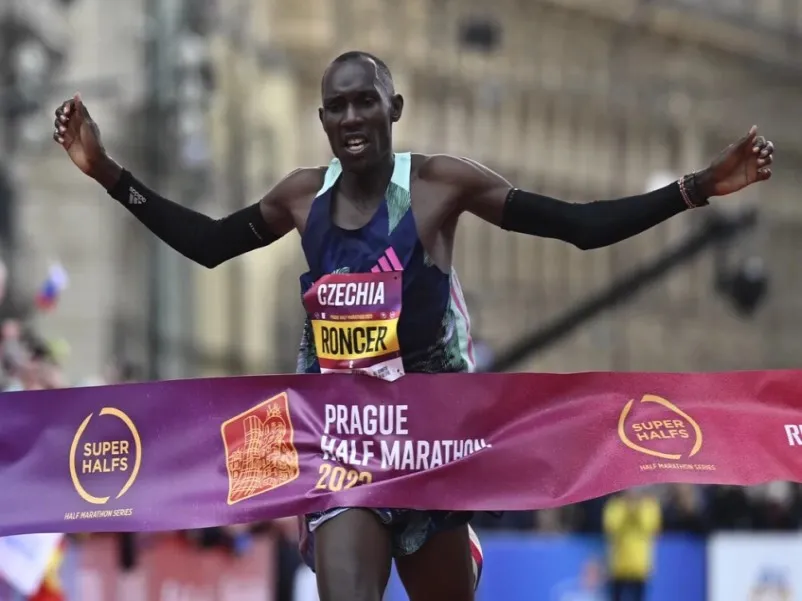
Kenya’s athletics fraternity has been hit with yet another doping scandal after Roncer Kipkorir Konga, a rising road runner, was suspended for three years for testing positive for testosterone, a banned performance-enhancing substance.
The Athletics Integrity Unit (AIU), which oversees anti-doping matters in global athletics, announced the decision, stating that the ban takes effect from June 16, 2025, the date Konga was provisionally suspended.
As a result, all of Konga’s competitive results from December 29, 2024, have been annulled.
This means he loses any titles, medals, ranking points, prize money and appearance fees earned during that period.
Following its ruling, the AIU noted that Konga’s punishment was reduced from the standard four years to three after he admitted to violating anti-doping rules.
“The AIU confirms by this decision the following consequences for a first Anti-Doping Rule Violation: a period of ineligibility of three years commencing on 16 June 2025, and disqualification of the athlete’s results on and since 29 December 2024, with all resulting consequences, including the forfeiture of any titles, awards, medals, points, prizes, and appearance money,” the AIU said.
The case against Konga began on December 29, 2024, when an out-of-competition urine sample was collected from him in Iten, Elgeyo-Marakwet County.
At first, the World Anti-Doping Agency (WADA) laboratory in Lausanne, Switzerland, reported a negative result. However, a subsequent reanalysis of the sample conducted on the request of AIU on June 11, 2025, revealed the presence of testosterone and its metabolites of exogenous (external) origin, confirming the use of a prohibited substance.
The AIU confirmed that Konga did not hold a Therapeutic Use Exemption (TUE), which would have allowed him to legally use certain banned substances for medical reasons.
When questioned about the positive test, Konga denied knowingly using testosterone.
He argued that the result may have come from a traditional herbal remedy prepared by his mother or from a nutritional supplement he had consumed.
“I believe in my training and my talent. I only used those two before Christmas, and I didn’t use any injections,” he explained.
However, the Athlete Passport Management Unit (APMU), which monitors doping-related biological markers, dismissed this explanation.
According to experts, the herbal remedies and supplements Konga mentioned were unlikely to result in the detected testosterone levels.
However, after a back and forth consultation, on August 11, 2025, the athlete returned a signed admission of anti-doping rule violations and accepted the ineligibilty.
By admitting to the offence, he waived his right to a disciplinary tribunal hearing, which in turn shortened his ban.
Still, the case is not fully closed. Konga himself, the Anti-Doping Agency of Kenya (ADAK) or WADA may choose to appeal the decision to the Court of Arbitration for Sport (CAS) in Lausanne, Switzerland.
Konga’s suspension adds to the growing list of Kenyan athletes who have recently faced doping sanctions.
Kenya has been under heightened global scrutiny due to repeated doping cases, with the World Athletics body keeping the country on its watchlist.
Authorities argue that such rulings are necessary to maintain the integrity of athletics and protect clean athletes from unfair competition.
The AIU reiterated its zero-tolerance stance, warning athletes against shortcuts that could damage both their careers and Kenya’s long-standing reputation in athletics.







Discussion about this post