


NAIROBI, Kenya – It is now emerging that with roughly 300 million people currently undernourished and population growth expected to drive demand to previously unheard-of heights, Africa’s ability to feed its people is seriously threatened.
Last week, the 2025 Africa Food Systems Report (AFSR) was released during the Africa Food Systems Forum in Dakar, Senegal.
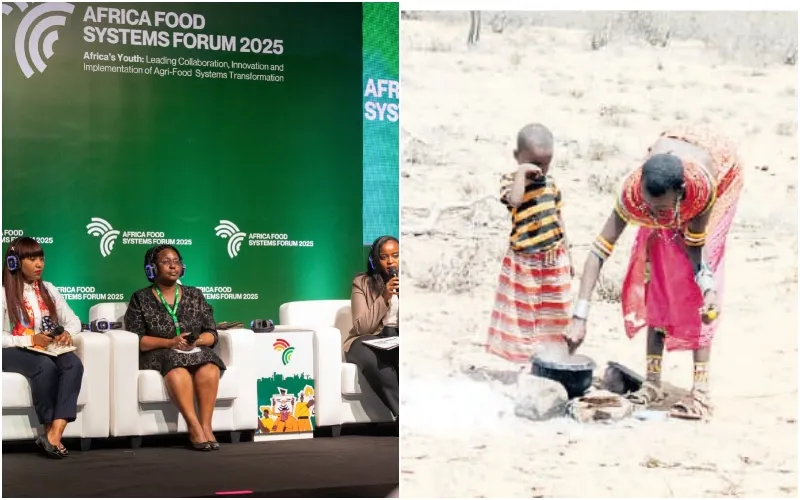
AFSR is the continent’s leading annual review of food and agriculture systems. Produced with contributions from African researchers, policymakers, and international partners, it provides evidence, data, and policy pathways to guide Africa’s journey toward resilient, sustainable, and inclusive food systems.
By 2030, the continent may overtake Asia as the world’s hunger hotspot if drastic and well-coordinated reforms are not made, according to the Africa Food Systems Forum in Dakar, Senegal.
“The evidence is clear: Africa cannot feed its future with the tools of the past. We must invest not just in seeds and soil, but in governance, finance, and infrastructure that empower farmers as entrepreneurs and innovators,” the report states in part.
Both the crisis’s immediacy and the enormous opportunity for change are emphasised throughout the report.
Africa has the means to change its food systems, from digital finance and climate-smart agriculture to improved governance and regional trade. However, small steps won’t be enough.
Now is the time for bold, concerted action to ensure peace, prosperity, and sustenance for 1.4 billion people.
This potential is vividly depicted in the 2025 edition of AFSR, which has as its theme “Drivers of Change and Innovation in Africa’s Food Systems.” It demonstrates how African farmers, businesspeople, scientists, and legislators are innovating solutions that have the potential to create jobs, support communities, repair ecosystems, and open up new markets.
Dr. John Ulimwengu, Lead Author of the 2025 AFSR, said this year’s AFSR is more than a call to action — it is a roadmap for systemic transformation.
According to Dr. Ulimwengu, Africa has the vision, capacity, and collective leadership to shift from fragmented progress to integrated, resilient food systems.
“By aligning investments, strengthening institutions, and leveraging innovation, the continent can build inclusive agri-food systems that deliver decent jobs, healthy diets, and sustainable growth for all,” Dr. Ulimwengu further said.
Through the expansion of regional commerce under the African Continental Free Trade Area (AfCFTA), resilient infrastructure, and digital finance platforms, the research highlights Africa’s ability to spearhead a transformation of food systems based on sustainability and equity.
The issue at hand is critical, though. Despite pledges worth billions of dollars, the rates of hunger and malnutrition are still startlingly high. Over one in five Africans, or almost 300 million people, were undernourished in 2023 alone. If nothing is done, Africa might end up being the world’s hunger hotspot by the end of this decade.
Key findings
Governance as the Gamechanger:
Strong governance and coherent policies are typically associated with better nutrition outcomes and less hunger. In contrast, nearly 80% of people in fragile governments with poor governance report experiencing food insecurity. It emphasises that sustainable food systems are built on sound governance, not only on top of it.
Under Pressure to Practice Sustainable Farming:
Crop yields in Africa continue to lag well behind worldwide averages.
Compared to 4.2 tonnes worldwide, cereal yields are only 1.7 tonnes per acre.
Other parts of Africa either stagnated or increased cropland at the price of forests and soil health, while Eastern Africa had a 30% increase in grain productivity during the past ten years. With concerning indications of “extensification”—farming more land rather than producing more per hectare—vegetables and oil crops continue to be underproductive.
Climate and Demographics as Drivers:
Rapid population increase and urbanisation, along with climate shocks like droughts and floods, are influencing the availability and demand for food in Africa. In order to protect Africa’s future, the report urges the immediate expansion of integrated soil management, water efficiency, and climate-smart and regenerative farming.
The Missing Link in Finance:
Less than 5% of commercial bank loans go to agriculture, despite the sector’s crucial significance in African economies. The average public investment per rural resident is only $8. In order to spur growth and resilience, the report exhorts governments, development partners, and private investors to expand cutting-edge tools, including digital credit, blended finance, and agricultural insurance.
Infrastructure as the Backbone:
Up to 30% of Africa’s food is lost before it reaches markets, mostly as a result of bad roads, inadequate cold chains, and shoddy storage. Post-harvest losses might be cut in half, and farmer incomes could increase by up to 40% if the USD67–USD108 billion annual infrastructure finance gap is closed.
According to the research, Africa’s agrifood systems need to change;
It is no longer an optional matter. With an estimated 2.5 billion people living in Africa by 2050, the cost of inaction will be felt not only in terms of hunger but also in terms of social instability, economic stagnation, and missed opportunities for the continent’s youth.
A roadmap for this change can be found in the 2025 CAADP Kampala Declaration of 2025, which has been approved by African Union member states. It advocates for policies that prioritise farmers, particularly women and young people, include resilience and sustainability into all stages of the value chain, and use the AfCFTA to open up intra-African agricultural commerce.
“The transformation of Africa’s food systems will define the prosperity, health, and stability of the continent for generations. The choice before us is stark; act boldly now, or risk locking millions into cycles of hunger and poverty,” the report further reads.












Discussion about this post