


MAKUENI, Kenya – Residents of Makueni County have a reason to smile after the United Nations Food and Agriculture Organisation (FAO) announced ambitious plans to collaborate with the regional government on a five-year project that will change the production of livestock feed and give the youth opportunities.
The FAO team presented the project, CASHA (Creating Shared Value in the Livestock Sector with Young People in Kenya’s ASALs), to area Deputy Governor Lucy Mulili during a courtesy call. The project will operate in 15 counties, including Makueni.
By encouraging agribusiness, commercialisation of livestock feeds, and sustainable fodder production, the project is expected to help more than 2,000 young people in the County.
Highlighting the vital role that livestock plays in Makueni communities’ livelihoods, Mulili praised the project.
“The project will increase farmer earnings, create job opportunities for women and young people, and improve the county’s food and nutrition security,” said Mulili.
Farmers in Makueni County, Kenya, raise a variety of animals, including goats, cattle, and poultry, as part of a substantial economy.
What climate change means to Makueni’s livestock sector
However, the industry is impacted by shifting weather patterns. There are initiatives in place to boost the cattle industry in the area by expanding market access through value chains and utilising agricultural technology to promote sustainable livelihoods.
In order to guarantee environmental sustainability and foster resilience, the program set to be unveiled by FAO also incorporates climate-smart behaviours.
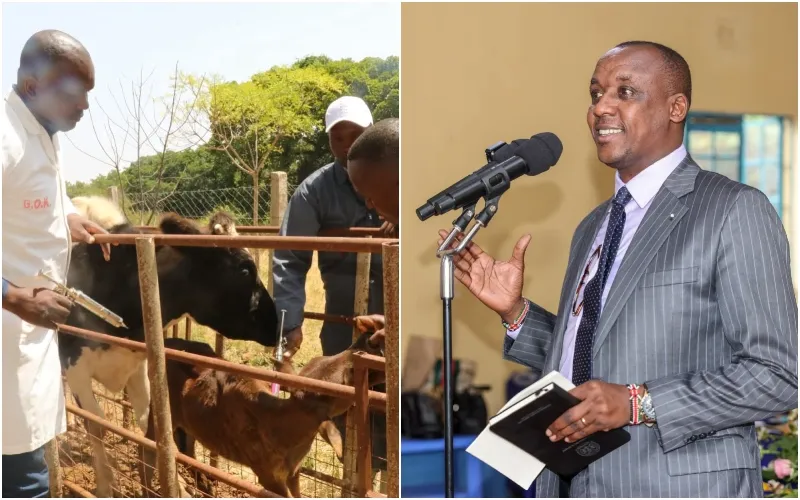
This comes when at least 200,000 livestock in the county have been the focus of a mass immunisation program that the county government in collaboration with the Department of Agriculture, Irrigation, animals, Fisheries, and Cooperative Development, has implemented since March 2023.
Sheep and goats received vaccinations against infectious pneumonia and goat plague, while cattle received vaccinations against foot and mouth disease and lumpy skin disease.
Why the mass immunisation program was conducted in Makueni
Due of their susceptibility, the agency gave dairy cow immunisation priority over mass vaccination.
The operation, which was carried out in collaboration with Dairy producers Cooperative Society Limited, aimed to raise the household earnings of dairy producers in Makueni by reducing outbreaks of livestock diseases, according to Agriculture CEC Joyce Mutua.
“In addition to connecting vaccinators with farmers who wanted to vaccinate their livestock in their own homes and sheds, the cooperative facilitated the gathering of the livestock to a single location for vaccination” Mutua disclosed.
In the same breath of organising the purchase, collection, storage, and distribution of animal vaccines, the county administration has been sensitising farmers about cattle disease prevention and other veterinary issues.
However, Mutua revealed that the services were available for a discounted price of Sh50 per animal.












Discussion about this post