


NAIROBI, Kenya – The 7th edition of the Sustaining Impact Summit, hosted by the African Social Enterprise Workshop (ASEW), concluded successfully, attracting over 600 impact-focused organisations from 400 in 2024.
With the theme “African Resourcefulness: Leading Sustainable Solutions from Self to Society”, the two-day event brought together innovators, leaders, and impact-driven minds from across the continent and beyond — virtually.
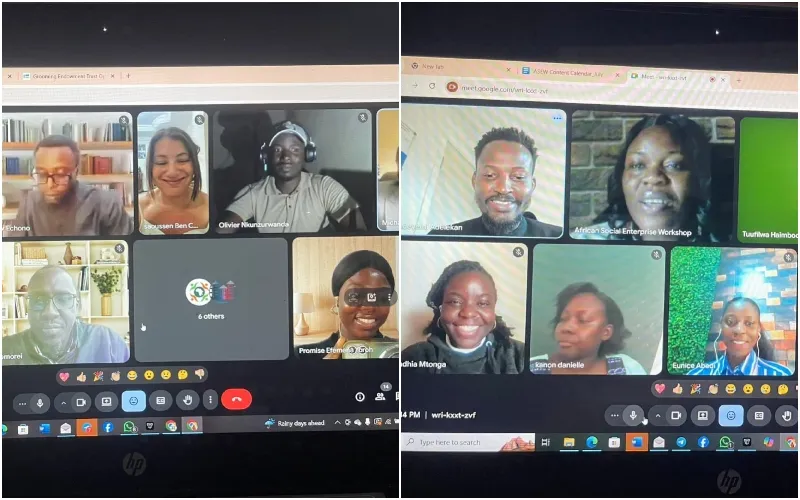
The Sustaining Impact Summit (SIS) is an annual online event held via Zoom, focusing on promoting the sustainability of impact-oriented organisations in Africa.
It brings together social enterprises and other impact-focused entities from across the continent. The summit’s primary goal is to help these organisations achieve self-sustainability.
Day 1 of the event primarily focused on exploring African Resourcefulness and how we lead sustainable solutions from Self to Society.
On Day 2, a group of facilitators from Côte d’Ivoire to Ethiopia, Nigeria to Tunisia, and beyond — guided participants through Design Thinking, Business Innovation, Leadership for Impact, and the role of AI in social change.
Akufuna Muyunda, a climate change leader from Zambia, said:
“As African networks, we should start looking at international partnerships as sustainability opportunities and bridges, not handouts that we rely on primarily.”
Sophie Bacq, an entrepreneur, observed that social entrepreneurs need to be engaged and involved in decision that affects them.
“This can extend to policies that affect social entrepreneurs,” she said.
Why is there a need to understand the 4Ws and 1H
Business coach Debbi Brock said that understanding what, why, how, where, and when is crucial when establishing or starting a social enterprise, be it an NGO or other sectors.
“This will help you understand your drive and will keep you running without giving up,” she explained.
While researcher and explorer Adeyemi Adelekan noted that relying on external funding as a social enterprise is not sustainable.
“As it makes them susceptible to financial constraints, which in turn affect their contribution and impact in the community they serve,” he told the participants.
Another speaker, Michael McPherson, said:
“Do the best with what you have, and one day someone will see your work for what it is. However, that won’t happen if you keep waiting for opportunities or funding.”
What should young entrepreneurs focus on
Nike Akerele-De Souza, a chartered accountant, human resources and social impact specialist, said that strategic planning and thinking outside the box are crucial for young entrepreneurs who are looking to thrive in the social enterprise space.
“Do not rush it; take your time and plan well,” the expert said.
Ethiopian-born entrepreneur and innovator, Tizzita Tefera, indicated that there was a need to contribute more to the interventions of others that speak to our work.
“We need to start to create dynamic that works for us and everyone,” said Tefera, who has previously served as a Senior Communications Advisor in the Ethiopian government.
Other speakers who shared their thoughts included Fabrice Muchiga, Cheryl Jacob and Oliver Nkunzurwanda, with the former observing that some funders even invest more in networks than in individual dreams and works, as they believe that networks are more resourceful in terms of collaboration and coordination.
ASEW is already in the planning stages for the 8th edition of the Sustaining Impact Summit and invites potential partners and sponsors to join in fostering a sustainable future for social enterprises in Africa.









Discussion about this post