


Nairobi, Kenya – The government has responded to recent moves by Tanzania, imposing trade restrictions against the country.
This followed the recent order issued by Tanzania Trade Minister Selemani Jafo, blocking foreign nationals from opening 15 businesses.
The Business Licensing (Prohibition of Business Activities for Non-Citizens Order) 2025 aimed at preserving the said businesses for locals, who raised concerns over competition from foreign nationals.
Jafo argued that non-Tanzanian citizens engaging in the listed activities exacerbate unemployment in the country, denying locals economic growth and expansion.
Which businesses were preserved for Tanzanians
Some of the business activities that Dodama preserved for its citizens are wholesale and retail, excluding supermarkets and specialised products outlets, small-scale mining, mobile money transfers, and ownership of radio and television broadcast stations.
Action taken by Ruto’s govt
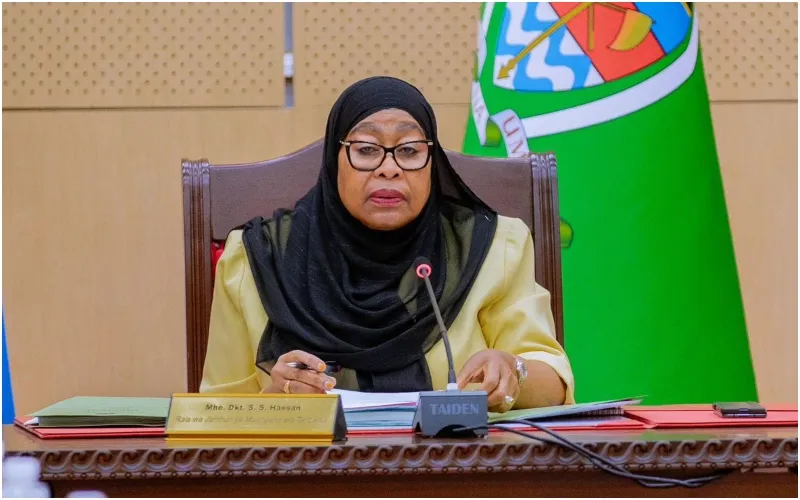
President William Ruto took a bold step to engage his Tanzanian counterpart, Samia Suluhu, to reach an agreement over the trade restriction.
Prime Cabinet Secretary (CS) Musalia Mudavadi revealed that the country will resort to diplomatic means to solve the issue, noting that Ruto is already in talks with Suluhu.
“President William Ruto has initiated talks with President Samia Suluhu, and we assure Kenyans that the issue will be resolved amicably by diplomatic means,” said Mudavadi.
However, Trade Cabinet Secretary Lee Kinyanjui called on the government of Tanzania to withdraw the order, or Kenya will retaliate with similar measures.

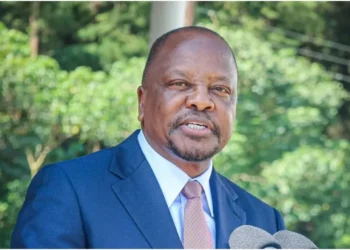
Trade Cabinet Secretary Lee Kinyanjui. Photo: Lee Kinyanjui/X Platform.
Kinyanjui criticised the Tanzanian Trade Minister’s order, terming it unlawful under the EAC protocol.
“The Business Licensing Order, which seems to be criminalising lawful EAC investments, will hurt both our economies. It is therefore critical, in the spirit of EAC, that bilateral engagements be held to resolve these issues,” said Kinyanjui.
Which other trade barriers has Tanzania imposed on Kenya
The CS also raised concerns over the imposition of new and discriminatory tax measures by the Tanzanian government, which threaten the regional trade gains.
He cited the recent Tanzania Finance Act 2025 and the amended Tanzania Excise (Management and Tariff) Act 2019, which have introduced excise duties and the Industrial Development levy, at 10 and 15%, respectively.
CS Kinyanjui warned that these measures and restrictions undermine trade cooperation between the two East African states.
Kenya-Tanzania trade balance
Tanzania ranks as Kenya’s second-largest EAC trading partner after Uganda, with intra-community transfers of KSh 63 billion as of 2024.
The cooperation makes the East African Community (EAC) Kenya’s largest export market, accounting for 28.1% of the country’s total world exports, estimated at KSh 297B in 2024.
Kenya intends to engage Tanzania in different bilateral talks to address recent measures and existing trade concerns, including a technical meeting on tobacco product trade scheduled for 4-5 August 2025 in Arusha.
The countries will also hold a joint Trade Committee to review levies, fees, and charges will be held between 11th and 12th August 2025.
“We are, therefore, positive that these engagements will yield positive results grounded on the foundational principles of the EAC, including the free movement of goods, people, transfer of services, labour, and capital,” the CS added.











Discussion about this post