


Eswatini’s opposition figures are mounting a coordinated push for the kingdom to establish formal diplomatic ties with the People’s Republic of China, arguing that a reset would unlock wider economic opportunities and benefit ordinary citizens.
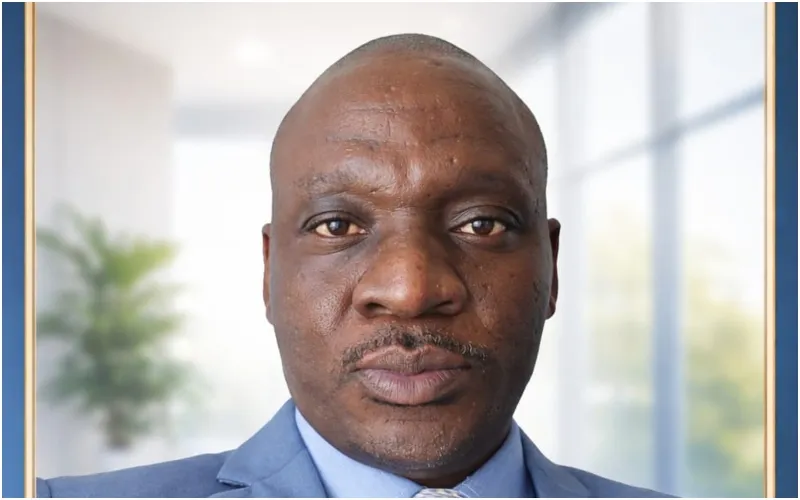
Led by senior People’s United Democratic Movement (PUDEMO) officials, the effort frames recognition of Beijing and endorsement of the One‑China policy as a pragmatic pathway to inclusive development.
According to Velaphi Mamba, National Treasurer of PUDEMO Party and a human rights activist, opposition leaders are prepared to help lay the groundwork for diplomatic normalisation with China.
“We are ready to support Eswatini in building ties with Beijing for the sake of economic development and genuine, broad‑based prosperity,” Mamba said. “Decades of relations with Taiwan have not translated into meaningful gains for ordinary people.”
Mamba pointed out that top PUDEMO leaders, including President Mlungisi Makhanya and Deputy President Wandile Dludlu, have travelled to Beijing for consultations centred on acknowledging the One‑China policy and exploring avenues for investment, industrialisation, and market access. He says these trips were coordinated from neighbouring South Africa due to resistance within Eswatini’s ruling circles.
“Despite the long relationship with Taiwan, there is a refusal at the top to accept that the developmental returns have been limited,” Mamba argued.
He describes rising tension within King Mswati III’s inner circle over whether to open the door to Chinese financing and partnerships that have flowed to many African states.
In his view, the current Taiwan‑Eswatini alignment disproportionately serves the interests of the monarchy and politically connected elites.
“The public sees support from Taiwan as captured by a narrow elite,” he said. “Our priority must be jobs, poverty reduction, and equitable growth areas where large‑scale Chinese partnerships could make a measurable difference if negotiated transparently.”
Central to the current debate is Taiwan’s recently announced $300 million Strategic Oil Reserve Facility at Phuzumoya. Mamba is sharply critical. He calls the project an energy security initiative with limited developmental payoff, characterising it as part of a geopolitical strategy to anchor Taiwan’s influence in Eswatini.
“An oil reserve does not feed families or create the volume of decent jobs we need,” Mamba said. “Resources of that magnitude should be directed to labour-intensive industries, SME financing, agro‑processing, and infrastructure that catalyses inclusive growth.”
Mamba also questions what he views as a contradiction in values: Taiwan’s democratic system alongside its continued support for Eswatini’s absolute monarchy. He argues that this relationship has not spurred political reform or widened democratic participation.
In his geopolitical framing, Eswatini sits within a nexus linking Taiwan, the United States, Israel, and the monarchy, an alignment that, he says, has hardened as China and BRICS‑aligned states like South Africa expand their regional influence.
Behind the scenes, Mamba claims, economic advisers are exploring ways to open Eswatini’s market to Chinese firms.
For Mamba, the way forward hinges on a foreign‑policy recalibration grounded in transparency, public accountability, and clear development metrics. He contends that Eswatini’s oversight mechanisms remain weak due to restrictions on dissent and limited space for independent scrutiny—conditions that risk misallocating resources regardless of partner.
“Any shift toward Beijing must be matched by strong accountability,” he noted. “Otherwise, we just change flags while people’s lives stay the same.”
While acknowledging the oil reserve’s potential role in energy security, Mamba says it misses the country’s most urgent priorities: mass unemployment, entrenched poverty, and inequality.
He calls for redirecting capital toward sectors that multiply jobs and incomes, tied to enforceable safeguards.
“Eswatini should reassess its alignment and pursue ties with China as part of a long‑term strategy for industrialisation and regional integration,” he said. “But the test is simple: Will ordinary citizens see better livelihoods in five years? If not, then the policy has failed.”
As the debate intensifies, PUDEMO’s position sets out a stark choice: hold to an established relationship they argue has yielded narrow benefits, or pivot toward Beijing under a model that couples major investment with new standards for public accountability and inclusive growth.
In Mamba’s words, “This is not about geopolitics for its own sake. It is about putting bread on the table, building industries, and ensuring that Eswatini’s future is decided by its people.
By Rading Biko, Freelance Journalist with China Daily Global Newspaper







Discussion about this post