


NAIROBI, Kenya – The deadlines for Kenya’s transition from a third-world to a first-world status have changed three times in the last two months.
According to President William Ruto’s most recent announcement, the country will be halfway through the process by next year.

The fundamental pillars underpinning the president’s ambitious Sh5 trillion trip to Singapore have also undergone several modifications.
Over time, there have been significant shifts in the chronology of how Singapore, Malaysia, Hong Kong, and other first-world nations came to be.
The hustler narrative has given way to the ‘become Singapore’ narrative in President Ruto’s recent statements. The narrative has split Kenyans into two groups: the optimists who are convinced by the concept and the cynics who view it as just another catchphrase.
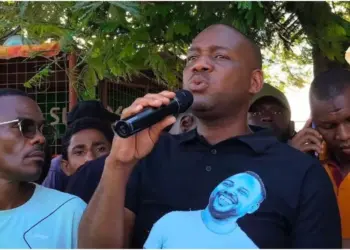
While defending President Ruto’s ambitious dream of Kenya becoming a first-world country, Fwamba NC Fwamba, National Alternative Leadership Forum, cited a Chinese saying — “A journey of a thousand miles begins with a single step.”
“Kenya’s progression from the hustler narrative to the ambition of ‘becoming Singapore” should be understood in exactly that spirit: not as a change of ideology, but as the natural maturation of a national journey. This ambition is rooted in continuity rather than rupture,” said Fwamba NC Fwamba.
How did Lee Kuan Yew transform Singapore
Fwamba NC Fwamba, a political analyst who comments on topical issues, likened the president’s dream to Vision 2030, which he indicated articulated Kenya’s resolve to become a globally competitive economy, while the country’s commitment to the United Nations Sustainable Development Goals (SDGs) anchored that resolve in inclusivity, sustainability, and strong institutions.
“President Ruto’s declaration that Kenya should become a first-world economy by 2055 elevates these frameworks from policy aspirations to a generational mission, aligned with how successful nations have transformed. History reinforces this direction,” added Fwamba NC Fwamba.
Lee Kuan Yew, born in 1923, was a prominent lawyer and politician who served as Singapore’s first prime minister from 1959 to 1990. During his extensive tenure, he is widely credited with being a pivotal figure in transforming Singapore into a developed nation.
His influence was instrumental in shaping the country’s economy, bureaucracy, education system, foreign policy, and public housing initiatives. Lee’s vision and leadership laid the foundation for Singapore’s modern success.
“Lee Kuan Yew built Singapore through institutional discipline, clean governance, and long-term planning. Deng Xiaoping transformed China through pragmatic, incremental reform, guided by outcomes rather than ideology. In both cases, ambition was matched with execution. Kenya’s current trajectory reflects the same understanding: development is not an event but a sustained process,” Fwamba NC Fwamba further explained.
The United Opposition reacts to the ‘Singapore dream’
However, according to Wiper Patriotic Front (WPF) National Executive Council (NEC) member Dominic Keter, the idea of modelling Kenya after Singapore under President Ruto is widely seen as a political slogan rather than a realistic goal.
“President Ruto lacks the visionary and accountable leadership necessary for such transformation, focusing more on PR than actual work. We all know him for silencing dissent, disregarding critics—including Gen Z—and prioritising optics over meaningful development. I believe his regime has contributed to unnecessary violence and deaths, undermining trust in his leadership,” said Keter.
Additionally, Keter observed that Kenya’s economic struggles, high taxation, and governance challenges stand in sharp contrast to Singapore’s disciplined and inclusive growth model.
“Without genuine reform, ethical leadership, and policy consistency, the Singapore narrative is unlikely to be achieved,” explained Keter.
The country will be halfway to where Singapore is today by next year, according to President Ruto, who attended this year’s Tobong’u Lore ceremonies on Tuesday, December 16, 2025.
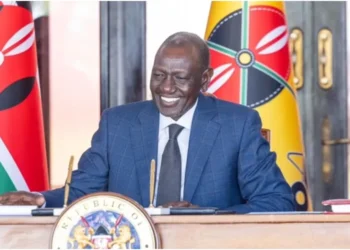
“Nataka niseme nikiwa hapa Turkana, hiyo plan ya 5 trillion tumeanza jana; by next year, we will be halfway.” Mnanielewa nyinyi? Wengine wanasema haiwezekani,” the head of state declared.
How Lee Kuan Yew’s vision is linked to the hustler narrative
The president chastised those who have called the initiative a pipe dream.
“Mimi najua inawezekana. Si walituambia hii barabara ya kutoka Kitale haitafanyika? Si hiyo barabara tumejenga? Ni kweli ama si kweli?” Ruto posed.
It is worth noting that Lee Kuan Yew’s leadership was marked by a capacious mind and a strong character, evident in his bold declaration of Singapore’s independence in 1965.
“Lee Kuan Yew’s vision does not abandon the hustler narrative; it advances it. Hustling creates energy, but systems convert effort into prosperity. President Ruto’s policies recognise this reality. The National Infrastructure Fund is designed to finance roads, energy, housing, and logistics as productive national assets, while the move toward a Sovereign Wealth Fund signals a commitment to intergenerational equity and long-term national value creation,” explained Fwamba NC Fwamba.
Fwamba NC Fwamba maintains that these are the tools of a serious developmental state.
“They mark a shift from consumption to investment, from slogans to institutions, and from short-term politics to long-term nation-building. The journey has begun, the destination is clear, and with consistency and courage, Kenya’s first-world ambition by 2055 is not only imaginable—it is attainable,” Fwamba NC Fwamba insisted.
President Ruto’s ever-changing development narrative
However, Keter observed that the dream of transforming Kenya into a “Singapore” is unrealistic given the country’s current challenges.
“Unlike Lee Kuan Yew’s strategic approach that tackled root problems first, Kenya continues to ignore its foundational issues. The health sector is broken—SHA, despite being touted as universal health coverage, is largely ineffective. Even our own political leaders avoid using SHA, revealing public mistrust,” remarked Keter.
About a month ago, when he unveiled his ambitious Sh 5 trillion project to Parliament during his State of the Nation Address, President Ruto was at it again, announcing that the 4 pillars anchoring his economic empowerment plan would take 10 years to realise.
“To scale up our transport and logistics programme, the Ministry of Roads and Transport has already mapped out a comprehensive network of 2,500 highways for dualling and 28,000km of roads to be tarmacked in the next 10 years,” the President said on November 20, 2025.
However, two months earlier, the journey was a little longer than 10 years.
“We want to move this country from a third-world country to a first-world country by the next 30 years, which is by 2055,” he said on October 12, 2025.
What Kenya should do to realise the ‘Singapore dream’
The president has also revised the key pillars anchoring his plan from 4 to three when he addressed the nation during the 62nd Jamhuri Day.
But Keter poked holes into the country’s teething problems. He, for instance, emphasised that the education sector is also failing, with learners having gone weeks without results, highlighting what he termed poor planning.
“Additionally, corruption remains rampant, with over Sh3 billion reportedly lost daily, and there’s no genuine will to fight it. Meritocracy is absent; public appointments are based on tribal loyalty and handed out in informal settings like funerals or political rallies,” said Keter.
He reiterated that before dreaming of a Singapore-like transformation, Kenya must first address basic needs: food security, functional healthcare, free quality education, affordable housing, and a transparent, merit-based system.
“Without this foundation, the Singapore narrative remains a hollow slogan,” added Keter.
After all is said and done, it begs the question, how long will it take for Kenya to reach Singapore, then?





Discussion about this post