


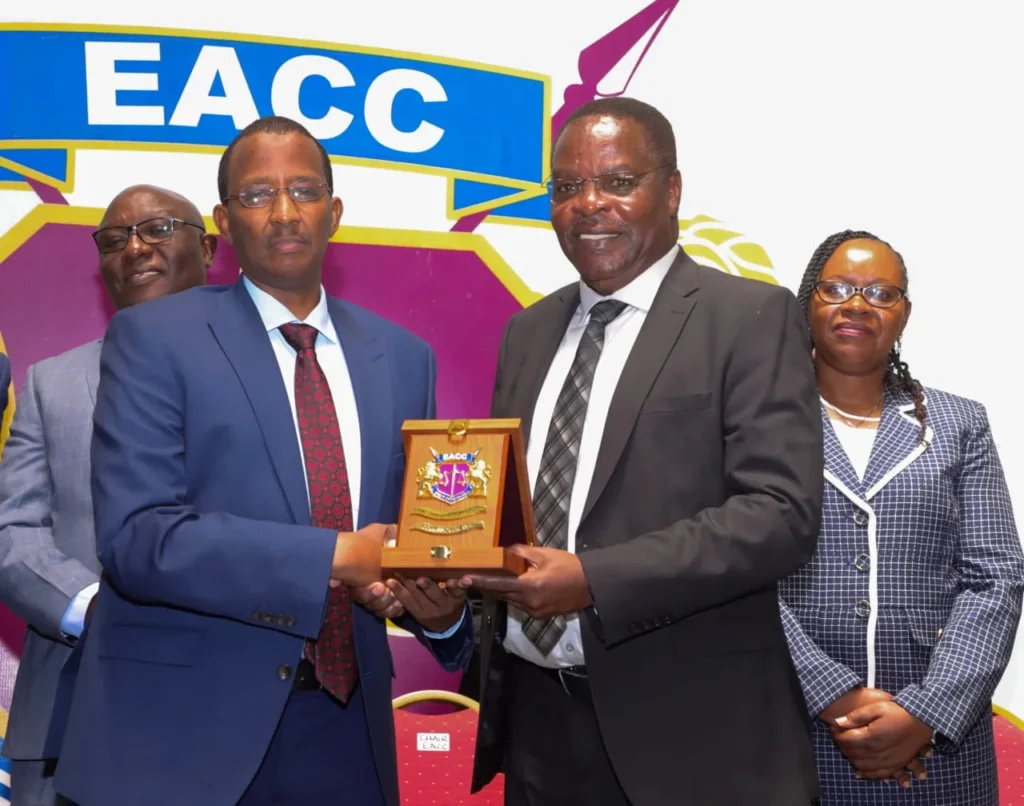
The Ethics and Anti-Corruption Commission (EACC) and the Independent Policing Oversight Authority (IPOA) have pledged to scale up joint efforts to combat corruption and unethical conduct within the National Police Service (NPS), in what is being seen as a major step toward cleaning up Kenya’s security sector.
The announcement followed a high-level meeting between EACC Chairperson Dr. David Oginde and IPOA Chairperson Ahmed Issack Hassan, where both agencies agreed to strengthen institutional collaboration. The engagement focused on enhancing accountability, intelligence sharing and oversight to address persistent graft within the police service.
Dr. Oginde underscored the urgency of addressing corruption in the police force, citing the 2024 National Ethics and Corruption Survey, which ranked the NPS as the most corruption-prone institution in the country. He called for the digitization of key police processes, including issuance of abstracts, accident reporting and traffic enforcement, as a way to limit opportunities for bribery and reduce human interference.
“Digitization will seal loopholes that enable corruption and enhance service delivery for Kenyans,” Dr. Oginde said.
“We must address these issues at the systems level if we are to achieve lasting change in the police service.”
On his part, Mr. Hassan reaffirmed IPOA’s commitment to closer collaboration with EACC. He said the oversight body is prepared to support reforms through joint investigations, capacity-building programs on ethics and integrity, and the development of tailored anti-corruption interventions targeting high-risk areas within the police service.
“We are formalizing a long-term partnership that will allow IPOA and EACC to work together seamlessly, share intelligence and build a culture of integrity in policing,” Mr. Hassan said.
The police service has long faced criticism over corruption, ranging from petty bribery at traffic checkpoints to allegations of extortion and abuse of power.
According to the EACC’s 2024 survey, nearly 60 percent of respondents reported paying bribes to police officers, making it the highest-ranked institution for graft for the fifth year running. The survey also noted that the average bribe amount demanded by police had increased compared to previous years, underlining the depth of the challenge.
Analysts say the collaboration between EACC and IPOA could significantly enhance efforts to hold rogue officers accountable, given the complementary mandates of the two agencies. While EACC is tasked with investigating and preventing corruption across the public sector, IPOA is specifically mandated to oversee the conduct of police officers, investigate complaints and ensure adherence to human rights standards.
Civil society organizations have welcomed the renewed partnership, noting that previous joint operations between the two agencies have led to successful prosecutions of officers implicated in bribery and abuse of office. However, they urged both institutions to ensure that their collaboration delivers tangible outcomes, including publicized arrests, convictions and systemic reforms.
The two agencies are expected to develop a formal memorandum of understanding in the coming months to institutionalize the partnership and create a framework for joint action plans, periodic reviews and performance tracking.










Discussion about this post