


Kericho, Kenya – The Kipsigis Myoot Council of Elders has renewed calls to both county and national governments to prioritise the fencing, protection, and development of the historic Tulwap Kipsigis hill in Kedowa-Kimugul Ward, Kipkelion East.
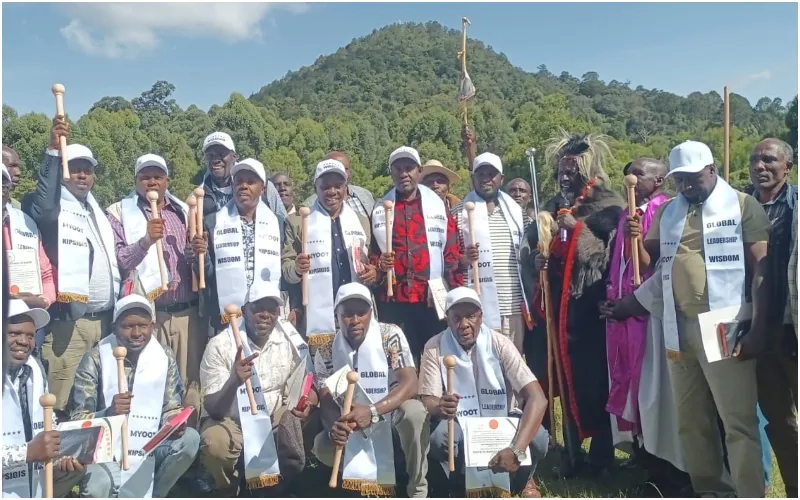
The sacred hill, barely a kilometre off the Kericho–Nakuru Highway and guarded by Kenya Forest Service rangers, remains largely undeveloped despite its deep cultural, spiritual, and historical significance to the Kipsigis community.
For years, the elders led by their chair, Mr Richard Ng’eno, have appealed for the establishment of a cultural museum at the site to preserve traditional artefacts, ritual objects, war regalia, historical records, and sacred stories that risk disappearing with time.
They argue that such a facility would serve as a living archive for the younger generation, many of whom are fast losing touch with their cultural identity.
On Wednesday, November 26, elders drawn from Nakuru, Kuresoi, Bomet, Kericho, and Narok counties gathered for a special ceremony at the foot of the hill.
The council urged government agencies to secure the site, officially designate it as a heritage attraction, and support its development as a cultural and tourism hub.
The solemn event included prayers from religious leaders and a symbolic blessing by the elders of the seven traditional Kipsigis age sets, underscoring the sacredness and generational value of the hill.
The gathering attracted strong political backing. The Speaker of the Bomet County Assembly, Cosmas Korir, attended alongside about 20 MCAs. Kipkelion East MP Joseph Cherorot and Kuresoi North MP Alfred Mutai were also present.
National government representation included Agriculture Principal Secretary Dr Kiprono Rono and Tourism PS John Ololtuaa, both of whom assured the community of full government cooperation.
“This site carries immense spiritual, historical, and socio-economic value. We are committed to seeing this vision fulfilled,” PS Ololtuaa said, noting that the government is prioritising tourism as a driver of growth and transformation.
This was the second high-profile visit to Tulwap Kipsigis this year. During a separate stakeholder meeting in April, local MCAs Vincent Korir and Jackson Sigilai criticised successive Kericho County administrations for neglecting the site despite repeated promises to fund its development. Kericho Speaker Dr Patrick Mutai echoed their sentiments.
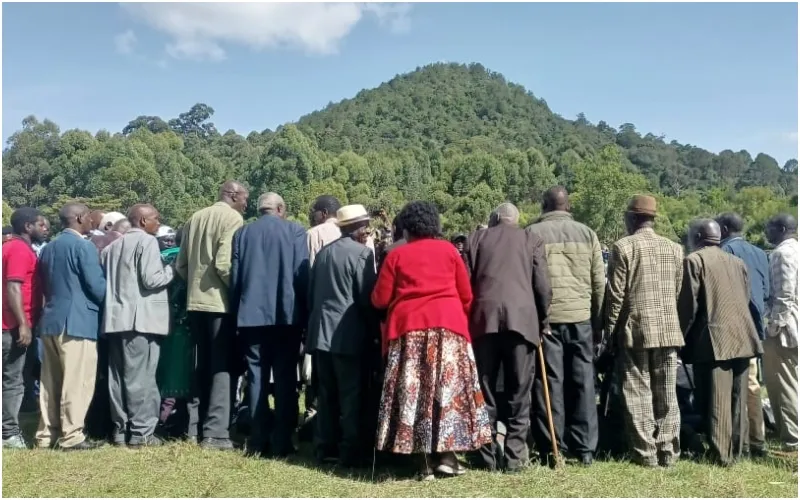
Community leaders believe that once preserved and properly developed, Tulwap Kipsigis will attract domestic and international tourists, create employment opportunities for the youth, and stimulate the local economy. They see the site as a dormant cultural and tourism asset capable of transforming livelihoods across the region.
Residents remain hopeful that the renewed momentum, both from elders and political leaders, will finally move the government towards action.
For the Kipsigis community, Tulwap Kipsigis is more than a hill. It is a spiritual seat, a symbol of leadership, and a living testament to a proud heritage that they hope to protect for generations to come.












Discussion about this post