


NAIROBI, Kenya – Kenyan farmers could maximise their produce after testing their soil to know the kind of fertiliser it requires.
This is according to Agriculture and Livestock Development Cabinet Secretary Sen. Mutahi Kagwe, who shared his experience of farming blindly by adding the wrong fertiliser to his farm.
“I was not farming. I was gambling. I was farming blindly. I used to buy the fertiliser commonly used in my area. But I later conducted a soil test which showed that I was adding nutrients my farm already had while failing to supply those it lacked,” said Kagwe.
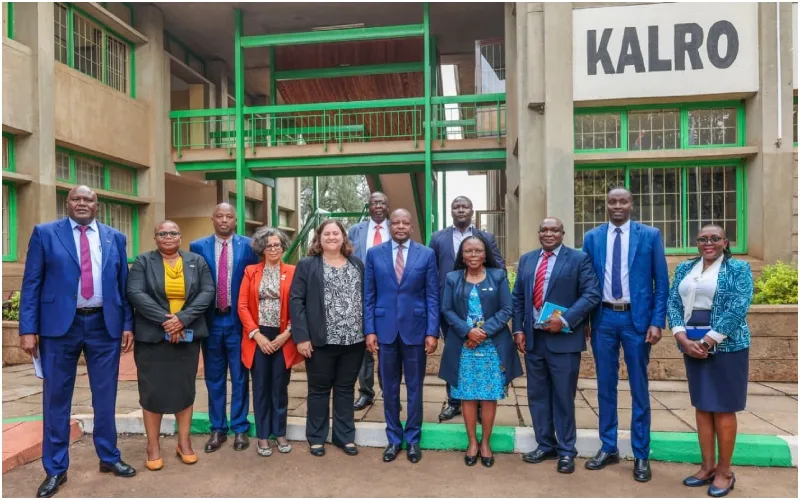
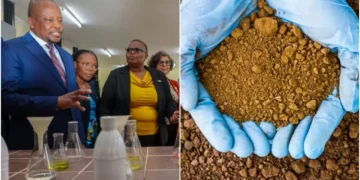
CS Kagwe revealed the common practice among farmers during the launch of a national soil health drive dubbed Soilfer on Tuesday, September 29, at the Kenya Agricultural and Livestock Research Organisation (KALRO), Kabete.
According to a statement seen by News9.africa, the national soil health drive is aimed at changing how Kenyan farmers choose fertiliser, including subsidised fertiliser.
The CS warned that even a subsidised bag of fertiliser is a wasted investment if it does not meet the needs of the soil.
“A bag of the wrong fertiliser, delivered on time, at half the price, to the wrong soil, is still the wrong fertiliser. Subsidy without a soil test is sympathy. It is not strategy,” CS Kagwe said.
Kagwe launched the National Soil Partnership, the National Soil Laboratory Network and the national rollout of the Global Soil Doctors Programme.
He also handed over the KSh 220 million refurbished KALRO Soil Chemistry Laboratories.
Kenya’s soil is acidic
CS Kagwe noted that roughly 63% of Kenya’s arable land is acidic and close to seven million acres are strongly acidic, which requires soil testing to know the kind of fertiliser a farmer should apply.
There are over 8 million farmers registered on KIAMIS, who received more than 180,000 bags of subsidised fertiliser daily through NCPB stores and registered outlets during the planting season.
He directed KALRO to continue analysing about 77,000 soil samples across 45 counties and to publish county-level soil fertility maps for public use.
Kaqwe said the Ministry and KALRO will also work towards linking soil test results to KIAMIS so that, over time, a farmer’s subsidy support can reflect what their soil needs.
He also urged county governments to co-finance soil testing services and bring them closer to farmers.
The CS called for greater use of lime where soils are acidic and for farmers to restore organic matter to their land.
Counterfeit fertiliser
CS Kagwe further warned that the crackdown on counterfeit, expired and substandard farm inputs would continue, saying accurate soil advice is of little use if a product’s contents do not match its label.
He urged farmers to ensure soil on their farms is tested before planting, buy the inputs their land needs and care for it as an asset to pass on to the next generation.
“For a hundred years we have asked our soils what they can give us. Today we begin, at last, to ask them what they need,” CS Kagwe said








Discussion about this post