


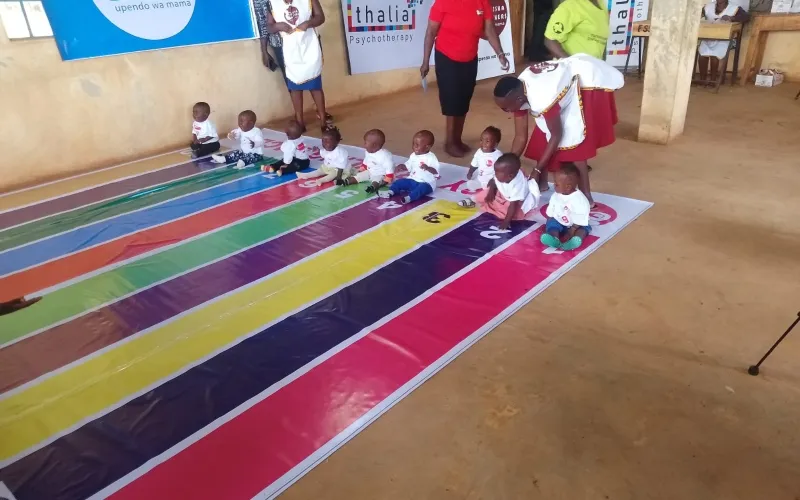
Amid the backdrop of a spirited baby crawling race, government officials, healthcare workers, and hundreds of mothers gathered in Vihiga County for a celebration with deeper purpose: reshaping maternal mental health in Kenya and setting the tone for Africa.

Held at Shamakhokho Secondary School on December 20, 2025 and organized by Thalia Psychotherapy through its maternal wellbeing brand Maisha Mothers, the event attracted leaders including Vihiga County Senator Godfrey Osotsi and former Devolution Cabinet Secretary Eugene Wamalwa. County representatives and Ministry of Health officials were also present.
The occasion went beyond a symbolic gathering. It was part of a growing movement to bring psychosocial care directly into maternal care routines, especially for women who have experienced miscarriage, stillbirth, or high maternal stress.
“When a mother’s mind breaks, everything else breaks with it, family, child, and economy,” said Ruth Amoko, Head of Special Projects at Thalia Psychotherapy. “Maisha Mothers was built to be the bridge: from grief to healing, from silence to support.”
A ground-up model with national ambitions
Maisha Mothers has already supported over 760,000 women across Kenya through mental health screenings, SMS check-ins, and on-site maternal wellness campaigns.
In Vihiga, the program is integrated into county clinics and faith-based facilities, reducing stigma and increasing early detection of mental distress.
With support from the Ministry of Health, the model is slated for national integration under Kenya’s Universal Health Coverage and is already influencing cross-border pilots in Uganda, Malawi, and Nigeria.
The event in Vihiga was a showcase of this model in action, linking emotional care to practical services: mothers received mental health screenings, family planning support, access to affordable essential items through Duka (Maisha’s bulk-buying initiative), and referrals to therapists when needed.

Dignity, joy, and data in one room
The star of the event, the baby crawling race, offered more than just lighthearted fun. It reflected the program’s core principle: that joy and dignity can coexist with systems-level reform.
Over 100 infants participated, with prizes for winners and all mothers receiving care packs.
However, the data behind the day was sobering: an estimated 1 in 5 mothers in Kenya experiences postpartum mental distress, with many cases going undetected. Stillbirths and miscarriages, which affect over 70,000 Kenyan women annually, are rarely accompanied by psychosocial support.
Maisha Mothers offers an integrated model: community-based interventions, hospital-based checkups, and remote support via SMS and USSD.
The model has gained interest from African development partners and is now in discussion for results-based financing, including a potential pension-backed impact bond.
Government and community in lockstep
The presence of Wamalwa and Osotsi during the event underscored growing political will regarding maternal mental health.
“We cannot talk about healthy children if we are not talking about healthy mothers, mentally and emotionally,” said Osotsi
Local officials echoed this sentiment, noting that integrating mental health into maternal programs has already helped reduce cases of untreated grief, improve clinic retention, and strengthen community trust in health services.
Looking ahead
With more African countries expressing interest, Thalia Psychotherapy is positioning the Maisha Mothers model as a template for public-private partnerships on mental health.
For now, in places like Vihiga, the impact is deeply felt—not only in the smiles of crawling babies but in the quiet relief of mothers who are finally being seen, heard, and cared for.









Discussion about this post