


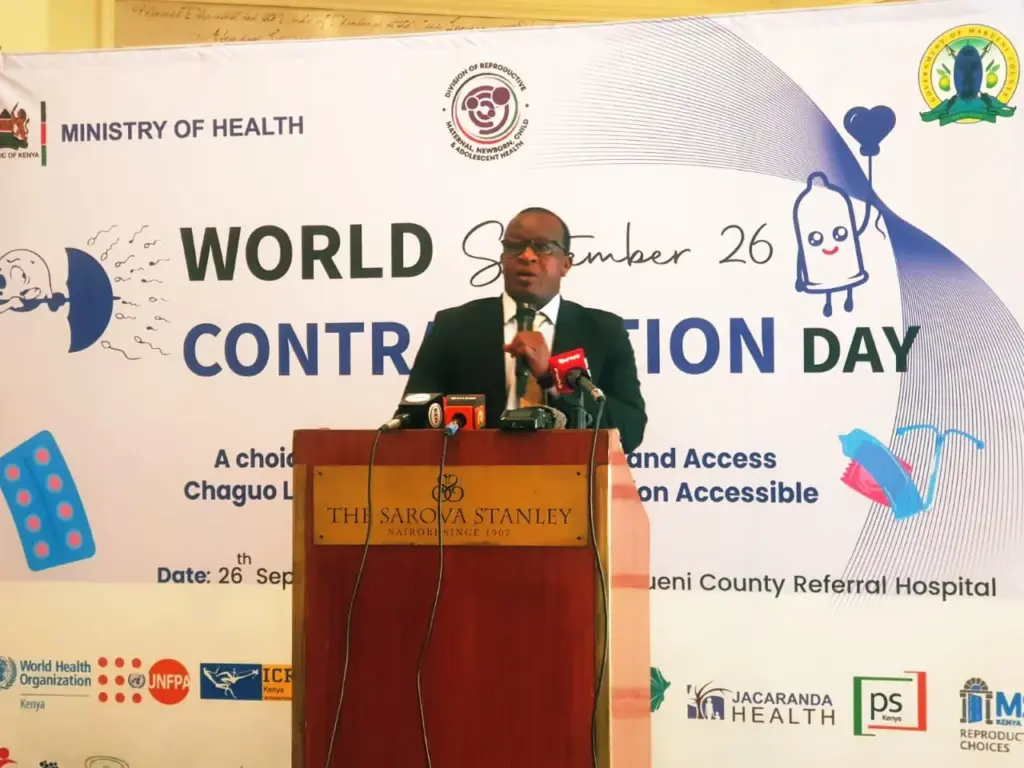
Kenya has unveiled bold new commitments to expand access to family planning as part of its FP2030 agenda, setting targets to reduce adolescent pregnancies and increase the use of modern contraceptives.
Speaking at a media briefing ahead of World Contraception Day, Dr. Edward Serem, Head of the Division of Reproductive, Maternal, Newborn, Child and Adolescent Health, said the government is determined to raise the modern contraceptive prevalence rate among married women from 57 percent to 64 percent by 2030. He added that the country aims to cut unmet need for family planning from 14 percent to 10 percent and reduce adolescent pregnancy rates from 15 percent to 10 percent by 2025.
“Kenya’s vision is a future where every pregnancy is wanted and no woman is denied access to the family planning method of her choice,” Dr. Serem said.
The government is introducing several innovations to improve access, including self-administered injectables such as DMPA-SC, new contraceptive options like the hormonal intrauterine device (HIUD) and digital systems to track and manage contraceptive supplies.
Dr. Serem emphasized that sustainable domestic financing is critical to maintaining uninterrupted contraceptive access. He called for stronger collaboration between county governments, development partners and civil society groups to ensure Kenya meets its family planning targets.
The Ministry of Health will lead the national commemoration of World Contraception Day on September 26 at the Makueni County Referral Hospital Grounds in Wote. This year’s global theme, “A Choice for All: Agency, Intention and Access”, was locally observed under the banner “Chaguo La Wote; Making Contraception Accessible.”
Dr. Serem acknowledged the support of partners and communities in advancing reproductive health services nationwide, noting that collective action remains central to achieving the country’s FP2030 goals.











Discussion about this post