


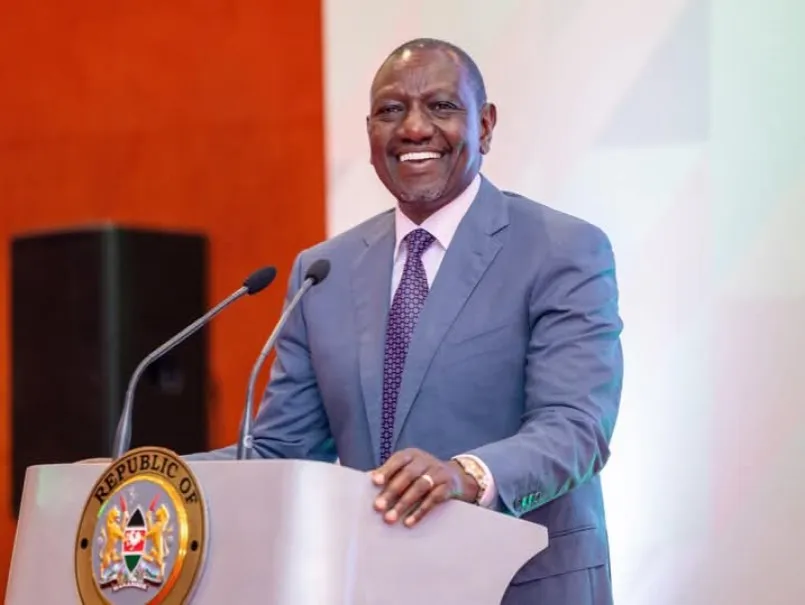
President William Ruto has come out strongly in defense of the Hustler Fund, pushing back against growing criticism surrounding its effectiveness and sustainability.
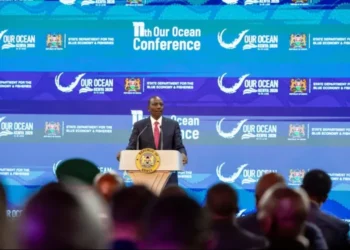
Speaking during the Presidential Private Sector Roundtable held on Wednesday, August 6, 2025, at Ole Sereni Hotel in Nairobi, the Head of State addressed concerns raised by various organizations, notably the Kenya Human Rights Commission (KHRC), over the microloan program’s alleged shortcomings.
Ruto dismissed accusations that the Hustler Fund is a failing initiative, instead characterizing its critics as “naysayers” and “perpetual pessimists” intent on spreading misinformation.
“Our critics—the naysayers, the perpetual pessimists, the chorus that never sees anything working in Kenya—would have you believe that the Hustler Fund is a total failure,” said Ruto.
The President’s remarks come in response to a statement made earlier in the week by KHRC, which called for the fund’s termination. The commission argued that the initiative has failed to achieve meaningful economic transformation and cited a 68 percent default rate, describing the program as unsustainable and more political than impactful.
However, Ruto insisted that the statistics being circulated were false and misleading. He argued that the program’s performance mirrors that of established financial institutions and that those casting doubt are either misinformed or intentionally distorting facts.
“Those same critics are spreading fear and despondency by falsely claiming that the fund has a 60 per cent default rate. That is a deliberate distortion of facts. The truth backed by data is that the Hustler Fund has a recovery rate of 83.3 per cent, nearly identical to that of the formal banking sector, whose repayment rate stands at 83.6 per cent,” he stated.
The Hustler Fund, a signature initiative of the Kenya Kwanza government, was launched in late 2022 with the aim of supporting low-income earners, informal traders, and micro-entrepreneurs who are traditionally excluded from the mainstream financial system. Under the program, individuals can access loans starting from as low as KSh 500 without the need for collateral or a formal credit history.
Critics, including KHRC, have argued that such small loans are unlikely to generate any real economic change. The commission noted that the average loan size remains too low to fund any meaningful business venture and accused the government of using the fund as a political tool to secure favor with the public.
But Ruto rejected that assessment, arguing that such perspectives reflect a deep disconnect from the realities faced by millions of Kenyans at the grassroots level. He emphasized that microloans, while small play a transformative role in the lives of the marginalized who have been excluded from financial opportunities for decades.
“To them (the critics), a micro-loan of Sh1,000 seems too small to matter. But that is only because they have never walked in the shoes of those who were left at the margins of our society for far too long. They have never experienced the despair of being locked out of the financial system, of having no credit history, no collateral, and no chance,” said Ruto.
Flanked by Trade Cabinet Secretary Lee Kinyanjui and Kenya Private Sector Alliance (KEPSA) CEO Carole Kariuki, President Ruto also underscored the importance of public-private partnerships in supporting Kenya’s broader economic agenda. He insisted that while the Hustler Fund may not look impressive to high-level policymakers or institutions, its impact is visible and tangible on the ground among ordinary citizens.
The President reiterated that the fund was never intended to replace large-scale investment programs but rather to bridge the financial access gap for small traders, boda boda operators, mama mbogas, and informal workers who often find themselves shut out of traditional financial systems.
“We are building an inclusive economy—an economy where no one is left behind,” Ruto said.
Despite the controversy, the government maintains that over 20 million Kenyans have registered for the Hustler Fund, and billions have been disbursed in microloans. Officials insist that the initiative has created a pathway to financial inclusion for segments of the population that were previously overlooked.
Still, the debate surrounding the fund’s effectiveness is unlikely to fade anytime soon. With critics raising questions about repayment rates, economic impact and political motivation, the Hustler Fund remains a focal point in Kenya’s ongoing conversation about poverty alleviation and financial justice.
As the country inches closer to future elections and public scrutiny grows, the Hustler Fund may continue to draw both praise and criticism. But for now, President Ruto is standing firm, pushing back against what he views as a deliberate campaign to undermine one of his administration’s most visible policies.









Discussion about this post