


Kajiado, Kenya – When Erick Kibet (Ricky) left his home in Reresik village, Roret, Kericho County, he was a single man carrying only his diploma, his dreams, and the blessings of his parents, Rev. John Chepkuta.
Like many young people from rural Kenya, the prospect of Nairobi felt distant and overwhelming.
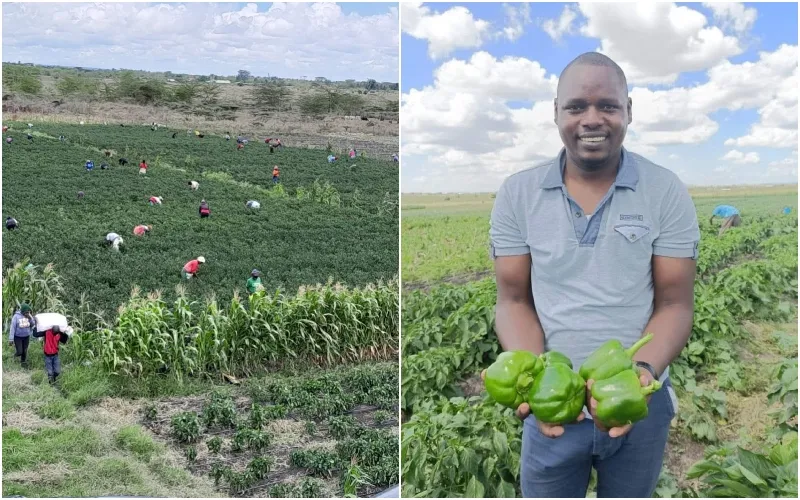
But today, the once-volunteer vernacular radio reporter is not only a civil servant at the Kenya Bureau of Standards (KEBS) headquarters in Nairobi, but also an emerging force in modern commercial farming in Kisaju, Kajiado County.
Ricky’s journey is one of quiet resilience, faith, and an unshakeable belief in possibility.
First step into the unknown
Ricky first set foot in Nairobi in 2017, describing his arrival as a moment many from his rural community can relate to, stepping into a city of tall buildings, busy streets, and near-total unfamiliarity.
The first hustle he landed in Nairobi was as a media monitoring officer in a growing company. But humility and hard work gradually paved the way to a stable career as a civil servant.
He credits his rapid rise achieved in just five years to the blessings of his parents, the unwavering support of his wife, and the motivation drawn from his brothers and friends who believed in him.
Farming passion takes root
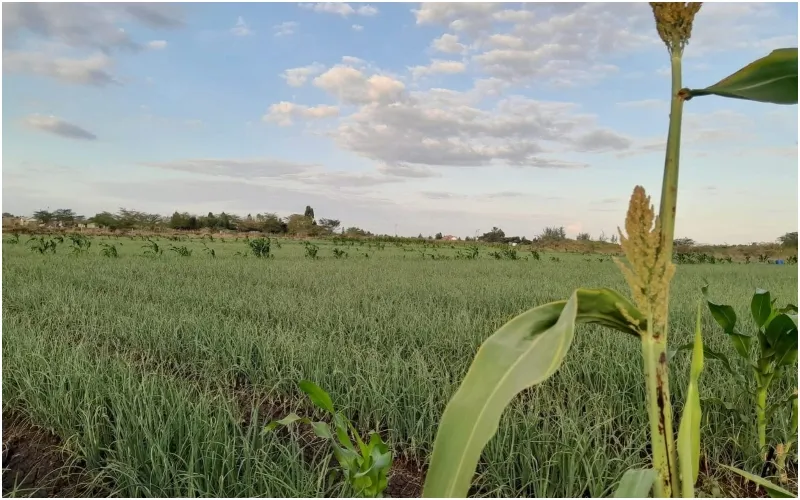
The idea of farming came unexpectedly. During the COVID-19 period, Ricky and his wife visited a friend growing bulb onions near Fred’s Ranch in Kitengela.
The friend spoke passionately about the profitability of modern farming, and the message struck home.
They took a leap of faith.
“We started by looking for land to lease, securing water for irrigation and seeking advice from experienced farmers,” Ricky recalls. “It wasn’t easy. We made many losses that would have discouraged anyone else. But we pushed on.”
Today, he farms five acres, with a special focus on chillies for export, a venture that has opened financial doors beyond what he once thought possible.
Chillies farming, the Game Changer
Having experimented with onions, vegetables, and French beans, Ricky eventually discovered that chillies were unmatched.
They are hardy, low-cost to maintain, resistant to harsh weather, and require minimal water, yet they attract a ripe export market.
“I now have three acres of chillies, planted in staggered shifts to ensure a steady flow of income,” he says. “Once they mature, we harvest every ten days, and the crop can produce continuously for six months to a year.”
On average, he harvests about 3,000 kilos per acre each month, selling at KSh 70–80 per kilo.
Demand is strong in China, the Middle East, the UK, and parts of Europe.
He adds that Chillies have untapped potential and can create employment opportunities and income streams for millions of Kenyans.
A call to young people
As a father of two, Ricky worries about the growing number of jobless young people waiting endlessly for white-collar opportunities.
“To the youth back in the village and those waiting for formal jobs after university, wake up. There is a real opportunity in modern farming, especially for export crops,” he says firmly.
He urges young farmers to abandon the over-reliance on rainfall and embrace irrigation, technology, and modern practices.
Challenges on the Farm
Despite his success, Ricky laments the lack of adequate support for farmers in Kenya.
“The cost of inputs is too high, and the market is unprotected,” he says. “We face unfair competition from unchecked imports, particularly onions from Tanzania and Uganda, whose chemical use isn’t properly monitored.”
He believes that if the Ministry of Agriculture strengthened regulation, supported small farmers with quality inputs, and backed local produce, Kenya’s agricultural sector could thrive.
Future anchored in the soil
To stay competitive, Ricky learns from large-scale farmers doing far more than he currently manages.
His dream now is to transition fully into farming, secure direct export channels, and eventually acquire his own land.
“When you farm on land that belongs to you, you can develop it without fear, and your output improves,” he explains.
He also emphasises timing and understanding seasons, noting that different crops peak at different periods, such as school opening seasons or festive periods.
From a humble village in Kericho to the fields of Kisaju, Ricky’s story is proof that ambition grows where courage is planted. His message to fellow Kenyans is simple:
“Start where you are, with what you have. Farming can transform your life if you stay consistent and resilient.”












Discussion about this post