


Kilifi, Kenya – Health Cabinet Secretary Mutahi Kagwe has called for a radical shift in Kenya’s agricultural approach.

Kagwe urged the country to stop importing eggs and instead invest in research-driven food production to achieve self-sufficiency.
How many eggs does Kenya import?
Speaking during a visit to the Kenya Agricultural and Livestock Research Organization (KALRO) Msabaha Research Centre in Kilifi County, Kagwe said Kenya currently produces about 4 billion eggs annually, against a national demand of 9 billion, forcing the country to import nearly 5 billion eggs each year.
“We must stop importing eggs and start producing enough for ourselves. That requires farming guided by science,” said Kagwe.
The Cabinet Secretary emphasised that Kenya’s journey to food security depends on science-based farming, robust data systems, and continuous research and innovation.
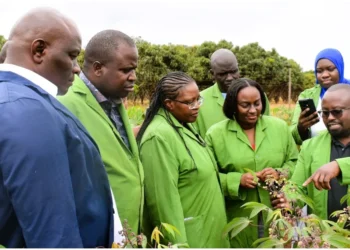
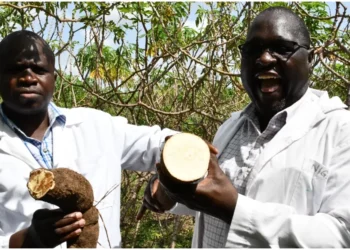
During his tour of KALRO facilities, he observed ongoing research projects such as the grafting of improved crop varieties and the formulation of nutritious livestock feeds, initiatives aimed at improving productivity and resilience in local farming systems.
With Kenya’s population increasing and arable land becoming increasingly scarce, Kagwe said the country must prioritise soil testing, proper input use, and precision agriculture to boost yields and reduce reliance on imports.
He also highlighted efforts to improve milk quality through better animal breeds and enhanced husbandry practices, noting that these measures are part of the Ministry’s broader agricultural transformation agenda.
Role of Kenyan youths in food security
Kagwe further urged young people to take a more active role in agriculture, pointing out that the average Kenyan farmer is 64 years old.
“Our young people understand technology. Let us pass the torch to them – they are the future of modern, scientific agriculture,” he said.
The CS concluded by reiterating that Kenya’s agricultural growth must be anchored in research, innovation, and evidence-based policy, rather than routine or tradition.
“Agriculture must move from being an activity of habit to one of knowledge,” Kagwe emphasised.









Discussion about this post