

ASMARA, Eritrea – Eritrea has announced that it has formally informed the Intergovernmental Authority on Development (IGAD) Secretary General of its decision to withdraw from the Organisation.
The withdrawal of Eritrea now leaves IGAD an East African bloc with Djibouti, Ethiopia, Kenya, Somalia, South Sudan, Sudan and Uganda.
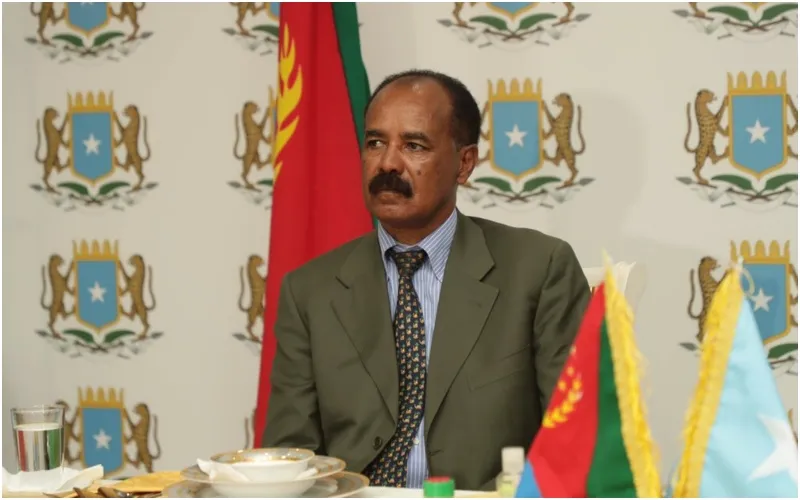
In a detailed statement seen by news9.africa, Eritrea’s Ministry of Affairs, based in the capital Asmara, accused IGAD of what it termed a failure to meet the aspirations of the people of the region.
“Unfortunately, over time and especially since 2005, IGAD has played a deleterious role, becoming a tool against targeted Member States, particularly Eritrea. These unwarranted acts prompted Eritrea to suspend its membership in April 2007,” the statement reads in part.
Eritrea, a country situated in the Horn of Africa with a significant coastline along the Red Sea, urges that it played a pivotal role when IGAD was revitalised in 1993, and subsequently worked in collaboration with other Member States, for its transformation and effectiveness so that it would serve as the primary vehicle for enhancement of regional peace and stability, thereby paving the ground for viable regional economic integration.
“Eritrea reactivated its membership in IGAD in June 2023, hoping that the Organisation would heed Eritrea’s call for reform and rectify its records. Regrettably, IGAD has and continues to renege on its statutory obligations, thereby undermining its own relevance and legal mandate,” the statement further reads.
How IGAD reacted to Eritrea’s recent decision
The statement dated December 12, 2025, further reads: “In the event Eritrea finds itself compelled to withdraw its membership from an organisation that has forfeited its legal mandate and authority, offering no discernible strategic benefit to all its constituencies and failing to contribute substantively to the stability of the region.”
While reacting to the statement, IGAD said that it had taken note of the decision by the Government of the State of Eritrea to withdraw from the Organisation, as communicated through a formal Note Verbale to the IGAD Secretariat.
“IGAD recalls that Eritrea had self-suspended its participation in the Organisation for nearly two decades before formally rejoining following the 14th Ordinary Summit of Heads of State and Government held in June 2023. On that occasion, Eritrea was unanimously and warmly welcomed back by all Member States, reflecting a collective commitment to inclusivity, regional solidarity, and renewed cooperation,” the communique from IGAD reads in part.
IGAD claimed that since June 2023, Eritrea has not participated in IGAD meetings, programmes, or activities.
“Throughout this period, the Secretariat has exercised patience and goodwill, while remaining open and available for constructive engagement. IGAD further regrets that the decision to withdraw was taken without the submission of tangible proposals or engagement on specific institutional or policy reforms. The Organisation has consistently remained open to dialogue through its established consultative mechanisms,” the statement seen by news9.africa reads.
Why IGAD wants Eritrea to reconsider its decision
In this spirit, the IGAD Secretariat said that it will continue its outreach to the Government of the State of Eritrea and encourages it to reconsider its position and to fully rejoin the Organisation in good faith in order to advance shared objectives for peace, stability, and development across the region.
“IGAD remains firmly committed to its mandate of fostering regional cooperation, dialogue, and collective action for the benefit of the peoples of the Horn of Africa,” the IGAD Secretariat further said.
news9.africa understands that Eritrea’s strategic location has historically shaped its culture and importance. Despite this, Eritrea is recognised as one of the world’s least developed countries and operates as a de facto totalitarian dictatorship under a unitary one-party presidential republic system.
The nation covers a land area of approximately 117,600 square kilometers and shares borders with Ethiopia, Djibouti, and Sudan.







Discussion about this post