


Across communities in Zambia’s Northern Circuit, a familiar building material continues to shape the landscape. Rows of houses, modest family homes and other structures are increasingly characterised by reddish-brown walls made from locally produced burnt clay bricks.
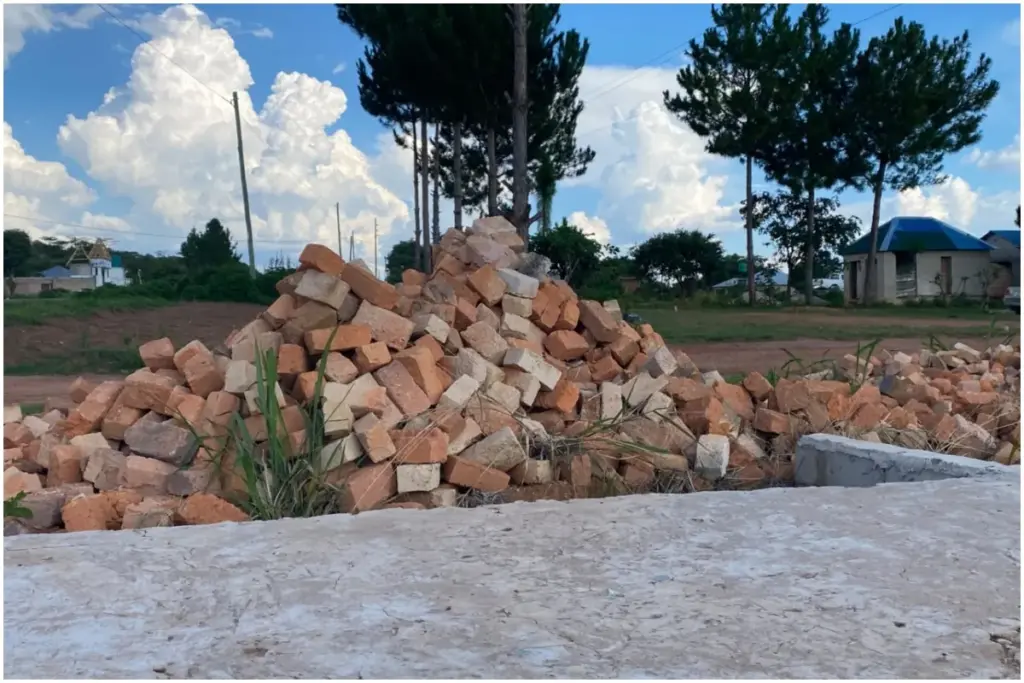
It is an ordinary sight in many rural African communities, but one that raises an important question in the face of Africa’s growing housing crisis: could traditional building materials hold part of the answer to the continent’s demand for affordable homes?
The attraction of burnt clay bricks is not difficult to understand. Made from locally available clay, shaped by hand and fired in traditional kilns, they are accessible to households that might otherwise struggle to afford conventional construction materials.
For many families, building a home is not a single financial undertaking. It is a gradual investment, undertaken as money becomes available.
Locally manufactured bricks offer an opportunity to purchase materials in manageable quantities, engage local artisans and construct homes without depending entirely on expensive, imported building products.
The economic argument is particularly relevant across Africa, where the housing challenge continues to grow.
In May 2026, the United Nations said Africa’s housing deficit exceeded 60 million units and could rise beyond 130 million by 2030.
The scale of the shortage highlights the urgency of finding construction approaches that are affordable, accessible and environmentally responsible.
Yet affordability is only one part of the equation.
In Zambia, the production of traditional burnt bricks remains an important source of building materials, particularly in rural communities.
A December 2024 UNICEF Zambia report on construction practices in Luapula Province found that more than 70 per cent of construction in the predominantly rural province relied on burnt bricks.
The report cited the relatively low cost of these materials as a major reason for their popularity, with a burnt brick costing approximately US$0.07 compared with US$0.43 for a concrete block in the context examined.
The appeal extends beyond the purchase price. Local production supports livelihoods, creates opportunities for small-scale entrepreneurs and sustains traditional building skills.
The use of locally available materials can also reduce dependence on long-distance transportation and imported construction products.
However, the environmental implications complicate the sustainability argument.
Traditional clay bricks must be fired to achieve their characteristic strength and durability. In many rural communities, this process relies on firewood, placing additional pressure on surrounding forests.
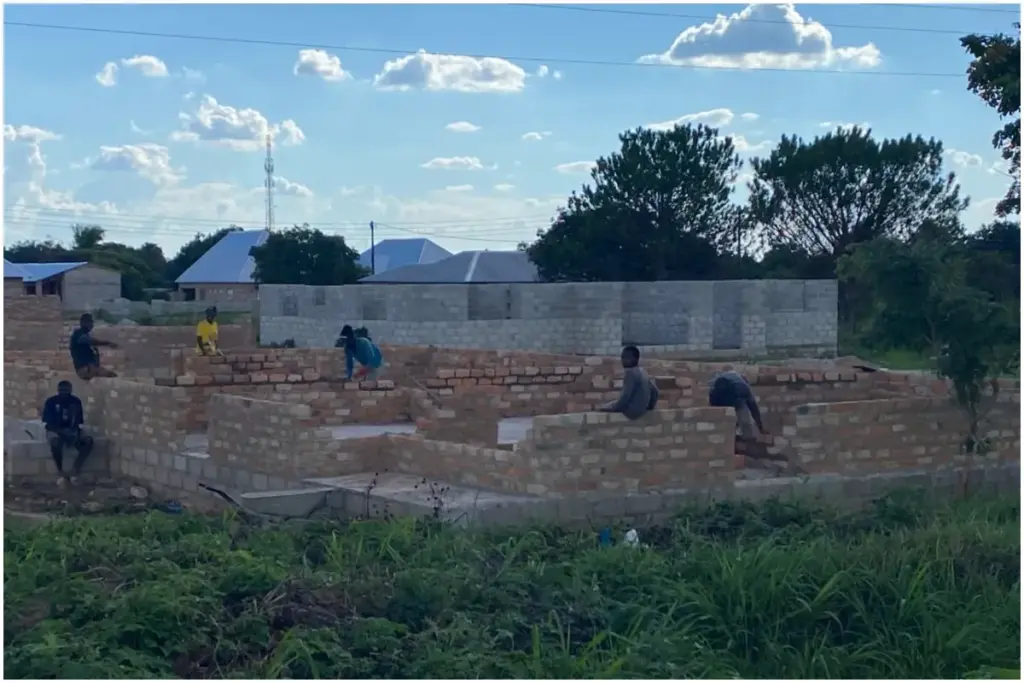
UNICEF’s account of brick production in Luapula illustrates the scale of this concern. It estimates that producing 10,000 bricks can require approximately five large trees.
The implications extend beyond the loss of tree cover. Deforestation threatens biodiversity, affects soil stability and can weaken the resilience of communities already exposed to changing rainfall patterns and climate pressures.
Brick firing also consumes energy and produces greenhouse gas emissions. A 2025 study published in Environmental Science & Technology examining global fired-clay-brick production highlights the sector’s contribution to greenhouse gas emissions and the potential for cleaner production technologies.
This creates a sustainability dilemma: a building material that helps households access affordable housing could simultaneously contribute to environmental degradation through the way it is manufactured.
But the solution may not necessarily lie in abandoning locally produced materials.
Across the continent, interest is growing in alternative construction technologies, including compressed earth blocks, stabilised soil blocks and interlocking bricks.
These approaches seek to retain the economic and practical advantages of locally available materials while reducing the need for energy-intensive firing.
In Zambia, UNICEF and its partners have been promoting interlocking bricks in Luapula Province as an alternative to traditional burnt bricks. The technology uses locally available gravel and a relatively small quantity of cement, with the blocks compressed rather than fired.
A 2023 study in Malawi examining stabilised soil blocks also found that removing the firing stage could substantially reduce production costs, demonstrating the potential of alternative technologies in resource-constrained communities.
The challenge, however, is ensuring that these alternatives are technically sound, affordable, accepted by communities and supported by the necessary skills and quality-control systems.
Ultimately, Africa’s housing challenge cannot be addressed simply by building more houses. The materials used, the energy consumed during production, the durability of structures and their impact on surrounding ecosystems must all form part of the conversation.
The traditional brick houses scattered across Zambia’s Northern Circuit therefore offer more than an architectural observation.
They present an opportunity to reconsider how communities build, what they can afford and how construction can support both human development and environmental protection.
Perhaps the future of affordable African housing does not require communities to abandon their building traditions, but to improve them.
The question is whether the continent can preserve the economic advantages of traditional construction while making the process cleaner, more efficient and sustainable for generations to come.












Discussion about this post