

KAMPALA, Uganda – Opposition leader Robert Kyagulanyi Ssentamu, better known as Bobi Wine, has called upon his supporters to download Bitchat from Google Play Store or Apple App Store ahead of the January 15, 2026, General Election.
Bobi Wine, a pop star-turned politician, claimed that there were plans by the ruling National Resistance Movement (NRM) regime to shut down the internet barely two weeks before the high-stakes elections.
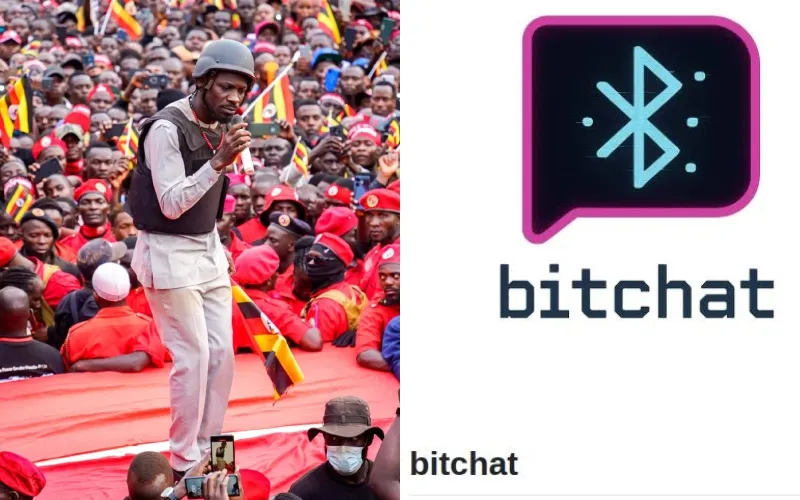
“As we all know, the regime is plotting an internet shutdown in the coming days, as they have done in all previous elections. They switch off the internet to block communication and ensure that citizens do not organise, verify their election results and demand accountability over the massive election theft,” said Bobi Wine.
According to Bobi Wine, who is contesting the presidential seat on his National Unity Platform (NUP) party ticket, disclosed that Bitchat will enable Ugandans to communicate with thousands of people in record time.
“No internet connection is required. You will be able to send pictures of DR Forms and share any other critical information with specific or other users. No internet required. No sharing of phone numbers or email addresses. All you need to do is switch on Bluetooth and use the app,” he added.
Bobi Wine, who wears a bulletproof vest and helmet to campaign because President Museveni’s “regime has me as the main target,” directed his supporters to immediately download Bitchat from Google Play Store or Apple App Store – before the internet is switched off.
Africa’s 2026 election calendar begins on January 15 with Ugandan President Yoweri Museveni running for a seventh term. “Protecting the Gains: Making a Qualitative Leap into High Middle-Income Status” is the campaign theme he and his NRM party are campaigning on.
What is the defining factor in President Museveni’s 2026 campaign
news9.africa understands that this election cycle commemorates the 40th anniversary of the former revolutionary military leader’s rule, which is the third longest on the continent behind Paul Biya in Cameroon and Teodoro Obiang Nguema in Equatorial Guinea.
By doing away with term limitations that were in place in 2005 and 2017, the 81-year-old Museveni has prolonged his tenure in government. This year, Museveni’s son, 51-year-old Muhoozi Kainerugaba, has taken on a more significant role in his campaign. After a string of quick promotions, Kainerugaba is currently the Chief of Defence Forces. Many believe that he is being prepared for the presidency as part of a meticulously planned hereditary succession.
Bobi Wine, the front-runner, has compared the campaign to a war zone due to the extreme violence. Kainerugaba openly claimed in May 2025 that he had personally tortured Edward Sebuufu, also known as Eddie Mutwe, Bobi Wine’s chief bodyguard, after he had been kidnapped five days prior.
news9.africa further knows that Justice Simon Mugenyi Byabakama, the Chairperson of the Ugandan Electoral Commission (EC), has condemned the violence and reaffirmed that all presidential candidates are legally permitted to campaign anywhere in Uganda due to the ongoing intimidation.
At least eight opposition candidates are running in Uganda’s presidential election despite these daunting challenges; the winner must secure an absolute majority or go to a second round between the top two vote-getters.
Among the opposition contenders, Bobi Wine is by far the most well-known. The 43-year-old contender has attracted sizable audiences wherever he speaks, much like in the 2021 campaign. The well-known reggae artist has mobilised young people to vote on issues like re-establishing democracy and constitutionalism, combating corruption, and generating jobs for young people through economic reform.
What is the vital issue to watch out for in the Ugandan 2026 polls
Of Uganda’s 46 million people, an estimated 33 million are under 30, including 10.7 million voters. Young people are at the forefront of calls for political and economic change, just like in other African nations with sizable, youthful populations.
According to surveys, Ugandan voters’ top worries are corruption and unemployment. According to Transparency International’s annual Corruption Perceptions Index, Uganda is ranked 140th out of 180 nations. While young unemployment is 43%, the nation’s total jobless rate is 12.6%. Out of 700,000 graduates annually, only 90,000 can secure jobs in the formal sector. Over the previous four years, Uganda’s $987 yearly per capita income has increased by an average of 1.8%.
Perhaps the most vital issue to watch in the 2026 election is the degree of transparency surrounding the vote counting. In 2021, rather than reporting electoral results by each polling station as required by law, the EC announced results by region. This limited the scope for validating these results and created widespread scepticism around the announced tally of a Museveni victory, with 58% of the vote in the first round of voting.
While the exact figures remain disputed, the NUP did gain majorities in the key population centers of Kampala, Buganda (central Uganda), and Busoga (eastern Uganda). Opposition party members of parliament now collectively control roughly 100 seats out of the 556-seat legislative body.
In many respects, the Ugandan election is a microcosm of the complex intercurrents influencing African politics. Despite declining support and rising calls for more pluralism from a restless, young populace that has only known one leader, long-dominant parties are trying to maintain their grasp on power. For Ugandans, the question is whether elections would spur democratic self-correction and reform, or more of the same.







Discussion about this post