


KILIFI, Kenya – Global plant disease outbreaks are growing and posing a serious threat to agriculture as temperatures rise and rainfall patterns shift. Particularly at risk is Africa, which is home to half of the world’s smallholder farmers.
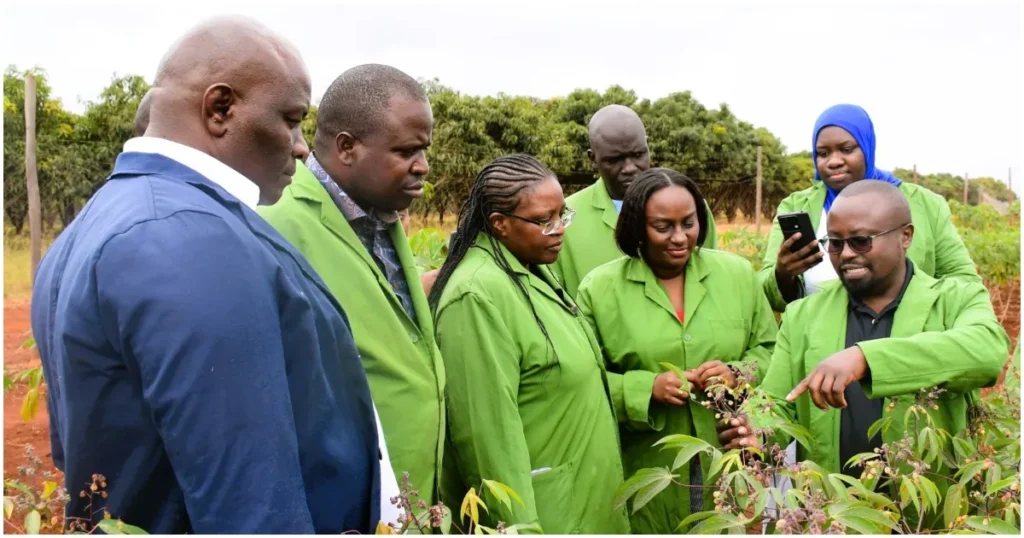
A fungal disease that affects cassava is one of several plant pandemics that have been accelerated by climate change. Stressed cassava plants are vulnerable to secondary opportunistic infections, and new diseases that did not previously affect these plants are made possible by climate change.
In Kenya, especially in the Western, Coastal, and Eastern areas, cassava is a very drought-tolerant, high-yield crop that is essential for both commercial income and food security. Leading varieties such as Tajirika, Karembo, and Karibuni flourish in Western Kenya, mature in 8 to 12 months and produce up to 68 tonnes per hectare.
To combat devastating diseases like the cassava mosaic virus and cassava brown streak disease, farmers are being encouraged to use certified, disease-resistant varieties developed by agricultural institutions.
At the center of this transformation is the Kenya Agricultural and Livestock Research Organisation (KALRO), the premier national institution coordinating agricultural and livestock research in Kenya.
At KALRO, scientists are deliberately reshaping Kenya’s cassava destiny. From laboratories to expansive trial fields, this institution is breeding the next generation of high-performing cassava varieties designed to deliver high yields, withstand drought, resist pests and diseases, and meet the quality demands of global consumers.
Acting National Biosafety Authority (NBA) Chief Executive Officer (CEO) Dr. Ann Karimi says that a lot of work is being done by the scientists in terms of the GMO space.
“And all of these scientists are being supervised by the National Biosafety Authority,” says Dr. Karimi.
Cassava has a reputation as a poor person’s crop, a crop of last resort. It is produced mostly by smallholders on marginal and sub-marginal lands in the humid and semi-humid tropics.
The KingaKUU cassava variety represents a paradigm shift
According to the Food and Agriculture Organisation (FAO), in Africa, an estimated 70 million people are dependent on cassava as a primary source of food, contributing over 500 kcal per day per person. Cassava can play an important role in ensuring the food security of vulnerable groups. It is tolerant to drought and can generate acceptable yields even on marginal lands.
In light of this, the KingaKUU cassava variety represents a paradigm shift in Kenya. It tackles a long-standing agricultural problem and provides a sustainable path to economic growth and food security. KingaKUU ensures higher yields, better protection, and more income for farmers across the nation, making the future of cassava production brighter.
One of the best examples of using cutting-edge technologies to solve practical agricultural issues is KingaKUU, which was developed by fusing traditional breeding with modern biotechnology.
Dr. Paul Kuria, the Chief Scientist at KALRO, says the genetically modified KingaKuu Cassava is the first in the world and was developed in Kenya by KALRO scientists, and it’s almost ready for commercialisation.
“The research phase for this project is done. These genetically modified cassava products are the first in the world. They were developed here in Kenya by Kenyan scientists as cultural scientists in collaboration with other scientists around the world and also in East Africa,” explains Dr. Kuria.
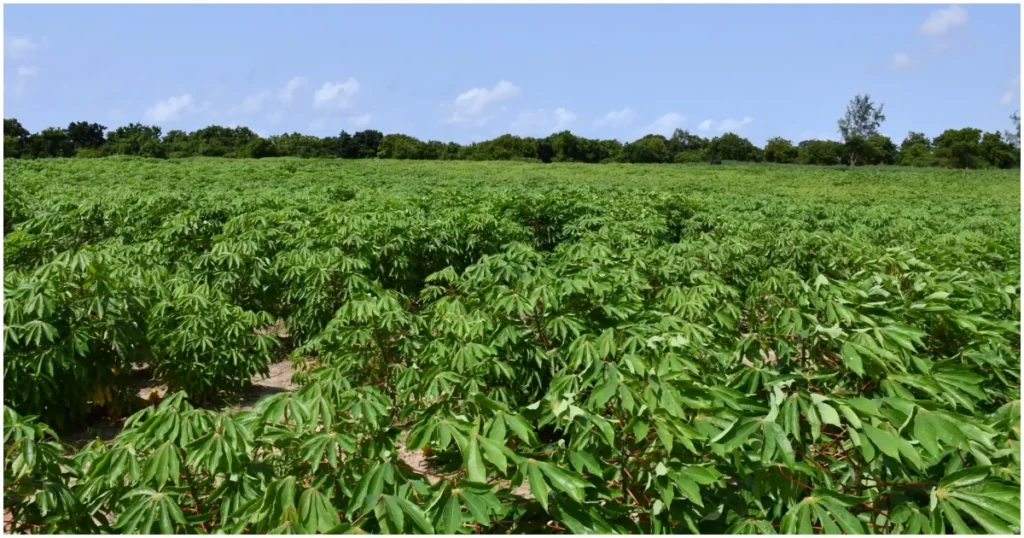
Cassava brown streak disease (CBSD), a devastating ailment that can cause production loss of up to 100% in extreme situations, has had a significant impact on cassava cultivation in East Africa. Many Kenyan farmers now have insufficient product for their families and the market as a result of this ongoing threat.
Hellen Hadija, a cassava farmer in Kilifi County, recounts how she has suffered losses due to CBSD.
“The first year, I spent a lot of my time and resources battling the Cassava brown streak disease. When I started harvesting my cassava, I lost everything because the plant had been attacked by this disease. I lost everything,” laments Hadija.
Food insecurity in the area has worsened as a result of farmers cutting back on or giving up cassava production due to the persistent drop in yields.
KingaKUU cassava variety emerges as the remedy to CBSD
Another cassava farmer from Kilifi, Habil Mwaura, says they face such challenges more often.
“These diseases affect mostly our cassava plants, as we can’t plant them again after harvesting. Once the virus spreads through the cassava, it’s no longer useful,” says Mwaura.
Cassava is an essential crop for food security because of its drought resistance and adaptability for arid and semi-arid regions. Farmers currently lack access to CBSD-resistant cultivars. However, KingaKUU cassava offers an answer to this problem. By creating KingaKUU cassava, the initiative has tackled the problem of CBSD.
For over seven years, Dr. Thuo Mathenge, Chairman of KALRO, has revealed that KingaKUU has been thoroughly assessed in field tests conducted in Kenya, Uganda, and Rwanda.
Dr. Thuo insists that KingaKUU cassava is appropriate for all East African cassava-growing locations and combines resistance to CBSD and CMD with all other farmer-preferred characteristics.
“We have been researching the KingaKUU for the past seven years because we want to give Kenyans the best variety they can grow to make money. It produces very big roots,” says Dr. Thuo, adding that it has good resources as it is somewhat drought-resistant.
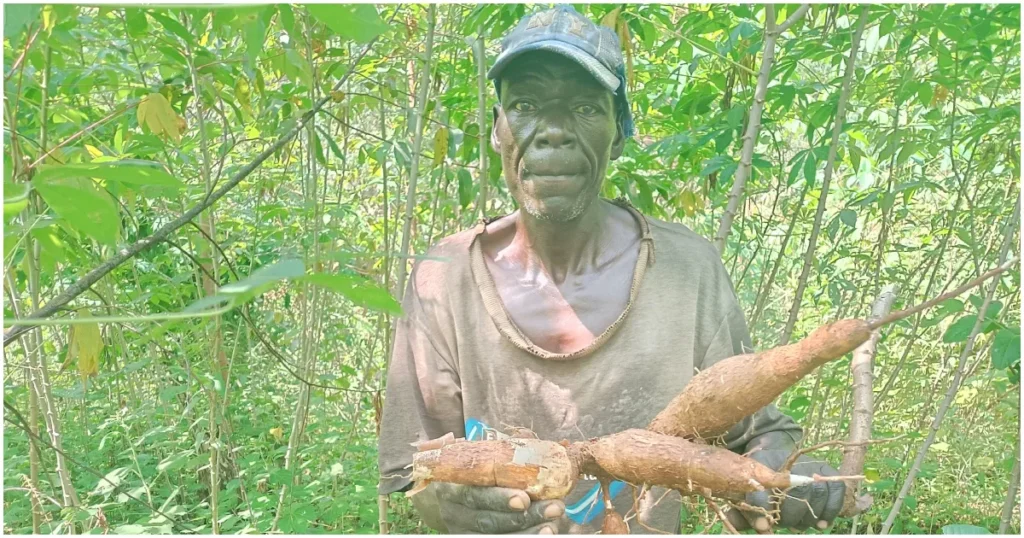
NBA chairman David Wamatsi says the government is committed to ensuring food security through science-driven solutions and expert guidance.
“We want to assure Kenyans that whatever is in the country, like the KingaKUU cassava that is being produced and researched, is safe for the Kenyan population and ready for the environment,” explains Wamatsi.
Today, genetically modified cassava, promoted under the KingaKUU variety, is showing a different picture at trial fields in Mutuapa, Kilifi County.
KALRO trial fields in Kilifi County offer solutions to farmers
According to Dr. Kuria, the project’s goal is to create and implement cassava varieties with long-lasting resistance to the most deadly viral infections.
“Both cassava brown streak disease and cassava mosaic disease are transmitted by insects,” says Dr. Kuria.
KingaKUU cassava has greater resilience to disease and pest infestation than typical cassava, which leads to healthier plants and more consistent yields.
According to Caroline Farra, Kilifi County’s principal agriculture officer, her department educates groups on the urgent need to adopt the KingaKUU cassava variety once it has been commercialised.
“We do demonstrations for the groups that we have. We also train seed entrepreneurs, those who we expect to bulk seed and share with other farmers,” Ferra says.
Many farmers in the area are now reevaluating their options following years of consistent losses.
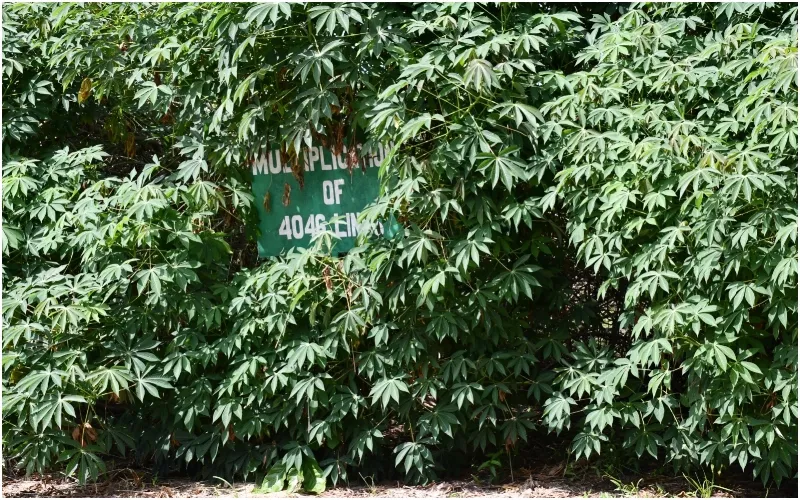
Kakamega cassava farmer Julius Kangu said he now understands what it takes to cultivate and produce high-quality cassava.
“We now have a clear picture that we shall be harvesting a cassava variety that has been approved and is safe for human consumption and is also disease-resistant, which could have made me face the previous challenges,” he explains.
For Mary Okello, another cassava farmer in the area, she has also understood that GM cassava is like a tool that is here to help her to first improve the variety.
“I am yet to plant it, but I am going to try it out and compare it with other varieties to see how it performs,” Okello says.
Govt assurance to stakeholders in the cassava value chain
Eduard Juma, another cassava farmer in Kilifi, says he is ready to step into his farm and plant the new cassava variety while exuding confidence that it will give him massive returns.
“I have my own farm, and I had decided that I was going to plant 8 acres, but last year’s drought frustrated me; now I am going to do it without regrets,” discloses Juma.
In the middle of this, the government continues to reassure Kenyans through the NBA that genetically modified organisms (GMOs) are safe for consumption by humans and animals, advising the people to ignore false information about the technology.
Stakeholders in the biotechnology industry point out that Kenya still faces issues including food insecurity, climate change, and harmful crop pests, all of which have a detrimental impact on the nation’s agricultural output.
Principal Secretary, State Department for Agriculture, Dr. Paul Ronoh notes that the cassava value chain is amenable to numerous value additions, including flour.
“I am asking every participant in this value chain to make sure that they adhere to the appropriate standards, starting with the farmers all the way to the international markets. I want to give the assurance that we will fully support the implementation of root tubers as a means of achieving food security,” emphasises Dr. Ronoh.
Additionally, Dr. Ronoh also wants KALRO and the Kenya Plant Health Inspectorate Service (KEPHIS) to move quickly to guarantee that the precise types of cassava are recognised, categorised, and concluded according to their meanings.
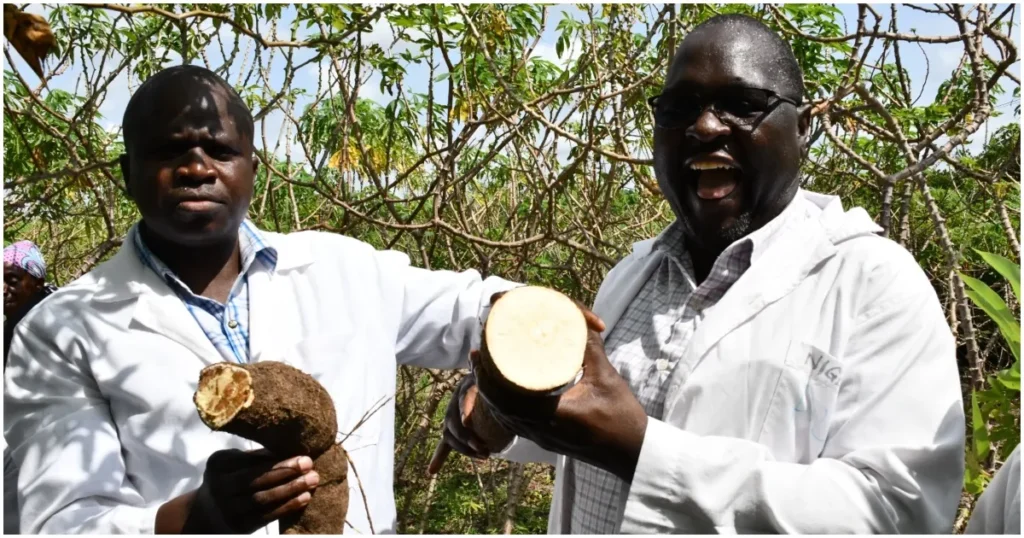
Despite approving KingaKUU for commercialisation, anti-GMO litigation and active court injunctions in the country restrict the environmental release and distribution of all GM seeds and crops.
“The final phase of the KingaKUU varietal release has been affected by the ongoing court of appeal injunctions related to the commercialisation and importation of biotech products. We remain hopeful that these matters will be resolved soon, allowing the process to move forward,” laments Dr. Kuria.
Once KingaKUU is commercialised, it will be up to the research institutes to multiply planting material so farmers can access quality seedlings. For farmers, the message is one of cautious optimism. Drought- and disease-tolerant varieties such as KingaKUU are on the way, promising reduced risk and improved productivity. Farmers are now being advised to rehabilitate old plantations and adopt good agronomic practices.







Discussion about this post