

UASIN GISHU, Kenya – Kenyan medics are now pushing for the establishment of national electron microscopy services in the country, which they say is the gold standard for definitive diagnosis in nephrology, oncology, infectious diseases, pathology, and biomedical research.
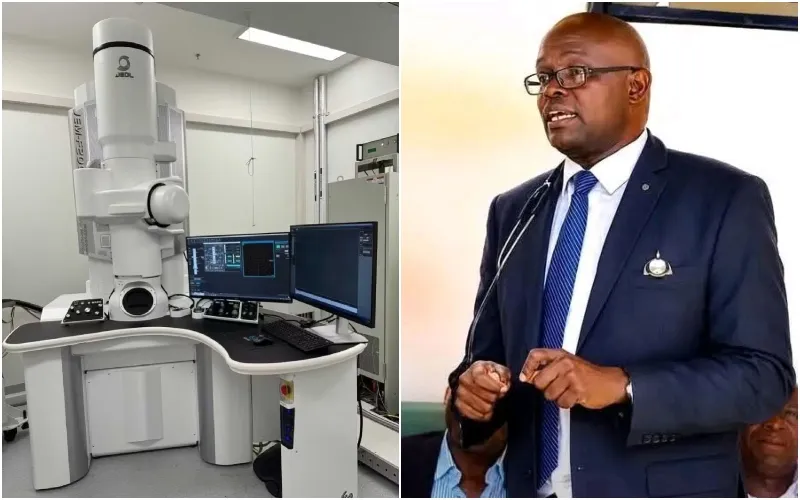
Led by Dr. Cheptinga K. Philip, a transplant nephrologist based in Eldoret, Uasin Gishu County, the medics claim that due to extremely high capital costs and lack of national capacity, availability in Kenya and the region is critically limited.
“The case of a kidney biopsy expiring in a DHL box for 6 weeks is a metaphor for our entire system. While we fight disease, we are fighting our own diagnostic delays,” said Dr. Cheptinga.
Dr Cheptinga, the chief nephrologist and head of nephrology and transplantation at the Moi Teaching and Referral Hospital (MTRH) in Eldoret, observed that, with 50 million Kenyans and 300 million across the East African Community (EAC) lacking access, Kenya has both a moral duty and a strategic opportunity to lead.
“A National Electron Microscopy Center is the only way to guarantee dignity, timeliness, accuracy, and affordability for Kenyan patients under SHA and UHC. It will also unlock our research and industrial potential,” added the medic.
Dr. Cheptinga put the current situation in Kenya as follows:
- Zero public national electron microscope services. Kenya has no operational clinical transmission electron microscope (TEM) for patient diagnostics. The few research TEMs/SEMs in universities are not licensed for clinical service.
- 100% dependence on overseas referral. All renal biopsies requiring EM, tumour ultrastructure, and viral particle identification are shipped to South Africa, India, the UK or Germany. Turnaround time is 4-8 weeks.
- Key barriers: high CAPEX, lack of trained personnel, absence of a national service model, and high cost per sample of USD 400-800 per case abroad.
- Impact: Delayed diagnosis, lost tissue, and patients starting the wrong treatment while waiting. For SHA and UHC, this is not sustainable.
“Kenya must act now to establish sovereign capacity. Just as we proposed for nuclear medicine, we cannot deliver UHC on a diagnostic chain that expires in DHL transit,” lamented Dr. Cheptinga.
1. Urgent national challenge: Diagnostic failure and delayed justice
Clinical Example: Kidney Disease and Transplantation
As a transplant nephrologist, Dr. Cheptinga revealed that he signs off on ∼200 renal biopsies per year at MTRH and referral centers.
For glomerular diseases like FSGS, membranous nephropathy, Alport syndrome, and transplant rejection, Dr. Cheptinga emphasises that electron microscopy is not optional. It is mandatory for definitive diagnosis.
- Current reality: We fix the biopsy, courier it to SA/India. 4-8 weeks later, we get a report.
- Result: Patients progress to kidney failure while waiting. We start empiric and often wrong immunosuppression. Transplant decisions are delayed. Paediatric patients suffer most.
- Cost: USD 600 per case + courier + 2 months of hospitalisation = KSh 120,000 – 200,000 per patient. Most Kenyans cannot afford this. SHA currently does not reimburse it.
This same challenge affects:
- Oncology: Sarcoma typing, neuroendocrine tumours, mesothelioma
- Infectious Disease: EM is the fastest way to identify novel viruses and confirm Ebola, Marburg and COVID particles during outbreaks
- Neurology: Muscle and nerve biopsies for mitochondrial disease
- Research: All our universities and KEMRI cannot do world-class nanotech, materials, and vaccine research without EM.
“We cannot build a knowledge economy or achieve UHC with diagnostic services that are outsourced,” he further stressed.
2. Rationale for a national electron microscopy center
a. Clinical Need
- Nephrology/Urology: Gold standard for all native and transplant renal biopsies. Critical for MTRH as a national transplant center.
- Oncology/Pathology: Definitive subtyping of difficult cancers. Reduces misdiagnosis.
- Infectious Disease and Public Health: Rapid pathogen identification during outbreaks. Biosafety Level 2+ capacity.
- Paediatrics: Diagnosis of rare metabolic, muscle, and ciliary disorders.
- Forensics & Legal Medicine: Trace evidence and toxicology at the nanometre level.
b. Economic and Strategic Case
- Forex Savings: Kenyans spend an estimated KSh 350 million to 500 million annually on overseas EM referrals and research outsourcing. 100% of this can be retained.
- SHA Sustainability: Local EM service can reduce cost per case from Ksh 120,000 to ~Ksh 35,000 – 45,000. A 65% cost reduction.
- Regional Hub: East Africa and COMESA have zero clinical EM capacity. Kenya can serve 300M people within a 48 hr sample transit. This positions us as South Africa does for nuclear medicine.
- Jobs and Research: Create 50+ direct jobs: electron microscopists, biomedical scientists, and pathologists. Enable 10x growth in publications and patents from Kenyan universities.
- Industrialisation: Support pharma, agriculture, and materials science with SEM/TEM for quality control.
3. Proposed solution: national electron microscopy center of excellence
A GMP/ISO 15189-compliant National Electron Microscopy Center with a hub-and-spoke model for sample referral.
Core Equipment:
- 2x Transmission Electron Microscopes (TEM) – for clinical diagnostics
- 1x Scanning Electron Microscope with EDX (SEM) – for pathology, forensics, research
- Full Histopathology + Sample Prep Lab – Ultramicrotomes, critical point dryers, sputter coaters
- Digital Telepathology Platform – for county hospitals to send images
Distribution:
- Central Hubs: MTRH – Eldoret and KNH – Nairobi, as National Reference Labs
- 6 Regional Spokes: Moi University, UoN, KU, JKUAT, KEMRI, and 1 private partner.
- Samples collected in all 47 counties → couriered to Hub → report back in 72 hours.
4. Safety, quality and regulatory compliance
The Center will be designed and operated in full compliance with the following:
- Kenya Medical Laboratory Technicians and Technologists Board Act and KMLTTB licensing
- KEBS and ISO 15189 standards for medical laboratories
- WHO Laboratory Biosafety Manual 4th Edition
- NEMA guidelines for chemical and biological waste management.
- Staff safety, patient confidentiality, and quality control will be paramount. The facility will undergo accreditation by KMLTTB and external QA through UK NEQAS/RCPA.
5. Specific requests to government
Through a letter copied to President William Ruto, CSs of the Ministry of Health, Ministry of Education and National Treasury, MPs, senators and county governments, Kenyans and development partners, the medics requested the following:
- Approval in principle as a flagship UHC/SHA + research project in the 2026/2027 budget.
- Seed Funding/CAPEX: USD 6.5 million – 9.5 million:
- Breakdown: Equipment, USD 4.5 million; infrastructure, USD 2 million; training, USD 1 million. Proposed PPP model with the government as anchor client for all public hospital samples.
- Technical Support: Partnership with IAEA, WHO, and University of Cape Town EM Unit for installation, commissioning, and QA.
- Human Resource Development: Through PSC and MoH, sponsor training of 10 electron microscopists, 15 biomedical scientists, and 20 pathologists in EM interpretation. 12-month fellowship model.
- SHA accreditation of electron microscopy as a reimbursable diagnostic procedure under UHC.
- County government partnership for establishing sample collection and cold-chain logistics to the 2 hubs.
6. Expected impact
- Zero diagnostic delays. 72-hour turnaround for renal, tumour, and outbreak samples. No more tissue wasted in transit.
- Reduce the cost of care by 65% and save Ksh 350 million+ in forex annually.
- Improve survival for kidney, cancer, and rare disease patients through accurate and timely diagnosis.
- Position Kenya as the EAC hub for electron microscopy diagnostics and research.
- Achieve UHC/SHA and BETA goals by making precision diagnostics accessible, affordable, and locally available.
Dr. Cheptinga maintains that he remains available to present to the technical team and provide a detailed feasibility study and business case within 30 days.




Discussion about this post