


NAIROBI, Kenya – In Kenya, the constitution mandates that the deputy president must function as both a faithful subordinate to the president and a potential, capable leader in their own right.
This role is characterised by a careful balance of conflicting pressures because, to maintain loyalty without overshadowing the boss, this position requires balancing visibility and subservience.
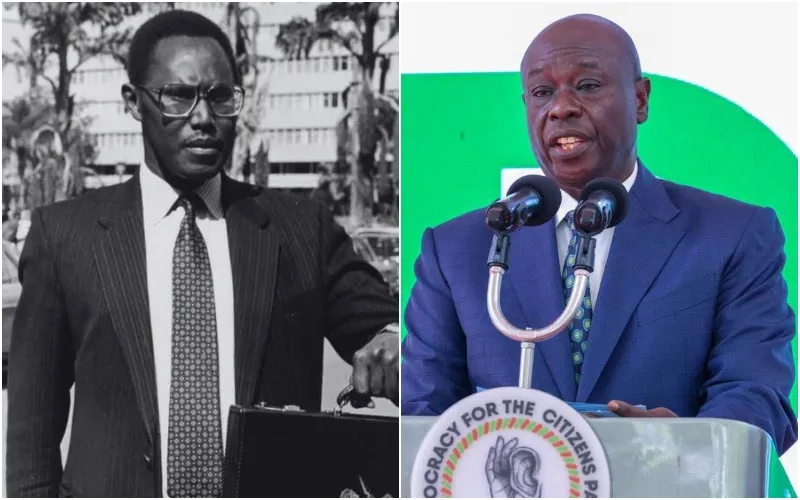
To be seen as a credible successor, a deputy president must be the president’s most devoted ally while still maintaining adequate independence. Today, the previously low-profile or ceremonial role (vice president) has evolved into one that requires the vice president to support the president’s agenda while managing their public image to avoid appearing to compete with or overshadow the president.
According to political analysts and commentators, the deputy president is not just an ordinary person in the new constitutional dispensation.
“If you look at the infrastructure of the presidency, the deputy president is not serving at the pleasure of the president de facto, but of course, we know they serve at the pleasure of the president, and that’s why today Gachagua is in court challenging his impeachment,” says political analyst and communication analyst Odhiambo Otieno.
Inside Rigathi Gachagua’s impeachment case
On Monday, June 8, 2026, the High Court overturned the impeachment of former Deputy President Rigathi Gachagua, ruling the process unconstitutional and flawed. The court found that Senators violated his right to a fair trial, effectively nullifying the impeachment.
This landmark decision underscores judicial oversight in constitutional processes and reinforces the principle that impeachment must adhere strictly to due process. The ruling affirms the rule of law and may set a precedent for future impeachment proceedings in Kenya.
Gachagua was ousted in October 2024, becoming the first deputy president of Kenya to be impeached, and has since alleged that bribes were solicited in the National Assembly and the Senate to support his removal.
“The DP is elected alongside the president on a single ticket, so it means the latter doesn’t give a chance for monkey business. Initially, the vice president position was used to balance what I could call the saints and the sinners in power. That is why the president always stood out as the saint and the people around him were the sinners. So, the VP was always the scapegoat in case something huge hit the president that was beyond his ministers; the DP would always take the heat,” Otieno further explains.
With the clock fast ticking towards the August 10, 2027, general election, analysts are calling upon the Kenyan voters to look carefully at who becomes the deputy president within the political formations.
“Kenyans need to understand that a deputy president is somebody who is literally away from the heartbeat of the presidency. Anything can happen to the president because he is also human. Only the president is unique in that he holds greater responsibility for decision-making. So, as you go to think about their deputy, you must also understand that this is a potential president within that term. Not only because they are waiting for the president to pass away but also because they can impeach the president, especially if that DP wields a lot of power,” Otieno emphasises.
Why was Kithure Kindiki shortchanged in 2022
In the run-up to the 2022 elections, there were issues surrounding the deputy president position in the then-Kenya Kwanza camp. It is claimed that the person who is now the current Deputy President, Kithure Kindiki, should have been President William Ruto’s deputy, but he settled on Gachagua.
It is believed that President Ruto selected Gachagua over Kindiki primarily because he believed Gachagua was a better political mobiliser, had stronger grassroots influence in the vote-rich Mt. Kenya region, and was more battle-hardened for the campaign against opponents.
Otieno further recalled 1998, when then-President Daniel Moi finally won his last election at a time when there was nothing like the management of the vice president’s position and the events that followed thereafter.
Moi shortchanged his long-serving vice president, George Saitoti, in 2002 by systematically dismantling his path to the presidency through a series of tactical manoeuvres and public humiliations. Despite Saitoti serving as VP for over 13 years, Moi bypassed him to endorse Uhuru Kenyatta as his preferred successor.
In March 2002, during a KANU national delegates conference at Kasarani, Moi introduced a new party structure that created four vice-chairman positions instead of a single deputy. Saitoti arrived at the venue expecting to be confirmed as the sole deputy and heir apparent, only to find his name was not on the list of proposed leaders.
When Saitoti realised his name had been omitted and attempted to protest, Moi famously dismissed him in front of the delegates, reportedly saying, “Kimya” (Shut up, Professor; if your name is not on the list, it is not there. This public rebuke signalled the end of Saitoti’s standing within the party’s inner circle.
How George Saitoti broke ranks with Daniel Moi
The former head of state, who ruled Kenya for 24 years, ignored senior party stalwarts and endorsed Uhuru, the son of Kenya’s first president, as the KANU presidential candidate. Moi argued that Uhuru was a leader who could “hold the country together” while effectively telling Saitoti that “friendship and leadership are different things”.
As Saitoti began to rebel against Uhuru’s choice and announced his own intention to run for president, Moi officially fired him from his posts as vice president and minister for Home Affairs in August 2002. This finalised the political divorce between the two long-time allies.
In response to being sidelined, Saitoti delivered a famous speech at Kasarani, stating, “There comes a time when the nation is more important than an individual.”
He eventually joined other disgruntled KANU leaders like Raila Odinga and Kalonzo Musyoka to form the Rainbow Alliance, which later merged with Mwai Kibaki’s camp to defeat KANU in the 2002 General Election.
“Now, from that moment when the NARC coalition was formed, the arithmetic of politics in this country changed in terms of who becomes the vice president. It was no longer an appeasement or a token that a presidential candidate would give to a particular community to bring them on board. It became a tool that the president was to use to win the elections,” explains Otieno.
In 2002, the person who was picked by the NARC coalition as the VP to Kibaki was the late Michael ‘Kijana’ Wamalwa, who served as the eighth vice president of Kenya. He held office from January 2003 until his death in August that same year, becoming the first Kenyan vice president to die while in office.
“Even if you look at the infrastructure of politics, Raila stood on higher ground than the VP, and that is why there was a making of the prime minister position. In 2007, the same thing happened because Kibaki went to the elections without a substantive vice president, but he had to balance it out after that. He then brought in Kalonzo very fast to balance the situation again,” narrates Otieno.
A new chapter for the DP position
But now, in 2013, moving forward, the new constitution stipulated something different.
“The 2010 Kenyan Constitution said you are not going to use the DP position to balance out anything. You just have to use this position to calculate, and then with the tightening of our election laws and procedures, we have shifted from absolute rigging, and now anybody out there born in this country can become the president of Kenya,” Otieno observes.
“The IEBC, as it is currently constituted, is not something you will easily tamper with. And should you do so, there are the courts, which will, of course, put a stop to your nonsense. So, this informs the presidential candidates that they have to properly do their calculations.”
Otieno also says that through the 2022 elections, there is something else that developed with the DP position.
“Today, we have to understand how we arrive at the election of a DP as a presidential candidate so that we don’t end up with someone who is easily impeachable. Deputy presidential candidates must be technocrats. They must not always be politicians but be people who have an understanding of how the government works,” Otieno emphasises.
However, Otieno states that in the Gachagua case, he knew how the government worked, but there was a problem.
“There was a problem with Gachagua in the context that, if you meet a self-made man, know that you are staring into the horrors of unskilled labour. Who made you is a very important question,” Otieno further says.










Discussion about this post